

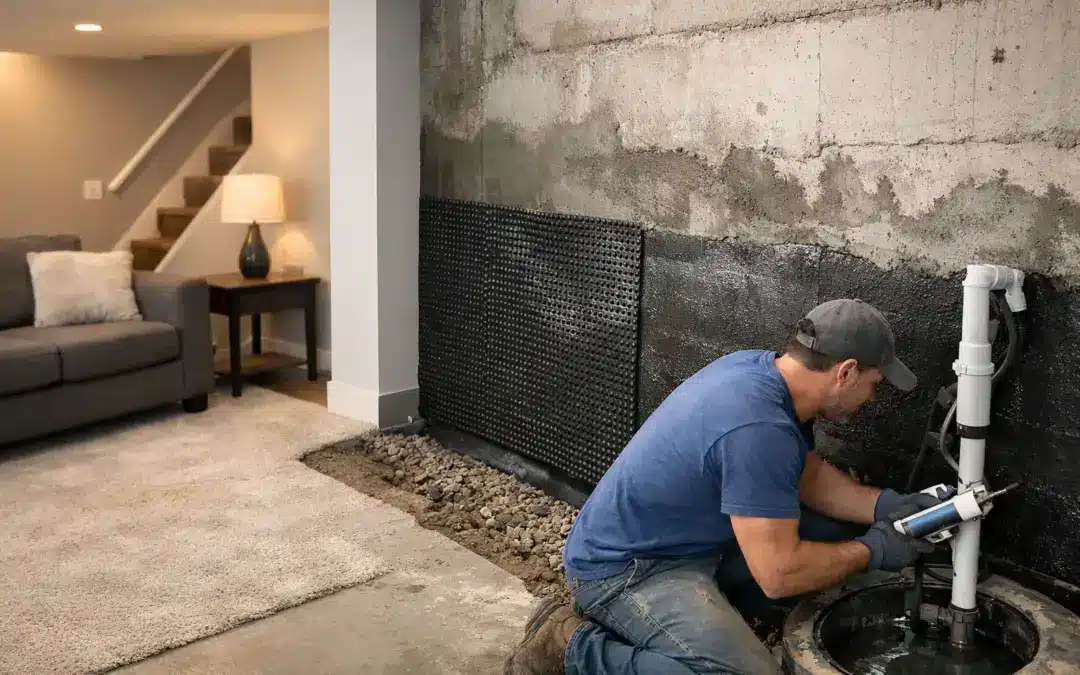
A basement that smells damp after every storm is not a minor annoyance. It is usually your house telling you that water is getting in somewhere it should not. So, is basement waterproofing worth it? In many homes, yes – but only when the solution matches the actual problem.
That distinction matters. Homeowners across Greater Philadelphia, Southeast Pennsylvania, and South Jersey often get sold broad waterproofing systems when the real issue is a single wall crack, poor grading, a failing sump pump, or hydrostatic pressure in one section of the foundation. The value is not in buying the biggest package. The value is in identifying the source of water and fixing it permanently.
Is basement waterproofing worth it for your home?
If your basement has active leaks, repeated dampness, musty odors, visible mold, peeling paint, efflorescence, or foundation cracks, basement waterproofing is often worth the investment because it prevents a much more expensive chain reaction. Water intrusion rarely stays limited to one wet corner. It spreads into framing, flooring, drywall, insulation, stored belongings, and indoor air quality.
For many homeowners, the better question is not whether waterproofing costs money. It does. The better question is what happens if you wait.
A wet basement can reduce usable space, create mold conditions, damage finishes, and contribute to structural movement over time. If you own an older home, that risk is even more relevant. Masonry walls, aging footers, and long-settled foundations are common in this region, and they do not improve with repeated moisture exposure.
That said, waterproofing is not always worth it in the way some contractors present it. If your basement had one isolated leak during an extreme storm because a gutter downspout dumped water at the foundation, you may not need a full interior drainage system. You may need exterior drainage correction and a targeted repair. That is why a real inspection matters.
When basement waterproofing pays off fastest
Waterproofing tends to deliver the clearest return when the problem is recurring. One puddle might be a fluke. Water after multiple storms, damp walls in humid weather, recurring mold, or a sump pit that cannot keep up is a pattern.
In those cases, the payoff comes in several forms. First, you avoid repeated cleanup and replacement costs. Second, you protect the structure. Third, you preserve the option to use or finish the basement later without building on top of a moisture problem.
For homeowners planning to stay in the house, the financial value is often tied to prevention. Spending money now to stop seepage can be far less expensive than replacing damaged flooring, cutting out moldy drywall, repairing framing, or dealing with foundation deterioration later.
For homeowners thinking about resale, a dry basement also matters more than many realize. Buyers notice moisture signs immediately. So do home inspectors. Even if waterproofing does not produce a dollar-for-dollar increase in sale price, it can remove a major objection and make the home easier to sell.
What makes waterproofing worth it or not worth it
The answer usually comes down to diagnosis, scope, and timing.
It is worth it when the repair is targeted
The most cost-effective waterproofing job is the one that solves the real source of intrusion without adding unnecessary work. If water enters through a wall crack, the right repair may be crack injection and sealing. If hydrostatic pressure is forcing water up at the floor joint, an interior drainage solution may be appropriate. If surface water is the problem, grading and discharge corrections may do the heavy lifting.
A science-driven inspection prevents overbuilding the solution. That is where homeowners save money.
It is not worth it when the contractor guesses
Generic recommendations are expensive. If someone proposes the same system for every basement without confirming where the water is entering, how often it happens, and what conditions trigger it, you should be cautious.
Water can travel. It may show up in one place and enter from another. Without proper leak detection and inspection, homeowners can end up paying for the wrong fix and still dealing with moisture afterward.
It is worth it before finishing a basement
If you are planning to install flooring, drywall, a home office, a gym, or an in-law area downstairs, waterproofing first is almost always the smarter move. Finishing a basement without addressing moisture is one of the most expensive mistakes a homeowner can make.
Even minor dampness can ruin finished materials. Once walls and floors are closed up, identifying the source becomes harder and repairs become more disruptive.
Common signs you should not ignore
Not every basement problem looks dramatic. In fact, many of the most costly cases start with subtle signs homeowners live with for years.
A persistent musty smell is one of the biggest red flags. So are white mineral deposits on walls, rust on appliances, bubbling paint, warped trim, wet carpet edges, or condensation that never seems normal. Hairline cracks may also be more important than they appear, especially if they widen, leak, or appear alongside bowing or inward wall movement.
If your basement feels humid all summer, that can be part of the moisture picture too. Humidity alone is not always a waterproofing issue, but chronic moisture in below-grade spaces often has a source. The longer that source is ignored, the more likely it is to affect air quality and materials.
Cost versus consequence
Homeowners often hesitate because they expect waterproofing to be a major project. Sometimes it is. Sometimes it is not. The price can vary significantly depending on whether you need a crack repair, sump pump upgrade, drainage correction, mold remediation, wall stabilization, or a broader waterproofing system.
That is exactly why blanket price claims are not very helpful.
A small targeted fix can be highly affordable. A larger system becomes worth it when the alternative is repeated damage, mold growth, lost storage, or structural repair later. The hidden cost of doing nothing is what skews the math. Water problems tend to expand, not stay contained.
There is also the issue of false savings. A cheap patch that lasts one season is usually more expensive than a permanent repair done correctly. Homeowners who have already paid for repeated caulking, repainting, dehumidifiers, or cleanup often find that the real waste was delaying the actual fix.
Why local conditions matter in Pennsylvania and New Jersey
Homes in this region deal with a mix of older construction, clay-heavy soils in some areas, freeze-thaw cycles, heavy rains, and aging exterior drainage. Those factors increase the chance of foundation cracks, wall seepage, and water pressure against basement walls.
That means the question is basement waterproofing worth it cannot be answered in the abstract. It has to be answered based on your home, your foundation type, your drainage conditions, and your leak pattern.
In practical terms, a rowhome basement in Philadelphia, a stone foundation in an older Delaware County home, and a finished lower level in South Jersey may all need very different solutions. Treating them the same is where homeowners overspend.
The best return comes from the right inspection
A proper waterproofing evaluation should do more than confirm that water exists. It should identify where it is entering, what pressure or drainage conditions are causing it, whether structural concerns are involved, and which repair options are truly necessary.
This is where an inspection-led company has a real advantage. Basement Waterproofing Scientists, for example, focuses on diagnostic leak detection rather than pushing a one-size-fits-all system. That approach is what makes waterproofing worth it more often – because you are paying for the right repair, not the broadest one.
Homeowners should expect clear findings, a direct explanation, and a recommendation that fits both the problem and the budget. If the issue can be solved with a smaller repair, that should be said plainly. If the basement needs a more comprehensive system, you should know exactly why.
So, is basement waterproofing worth it?
If your basement is taking on water, staying damp, growing mold, or showing early structural warning signs, the answer is usually yes. If the recommendation is based on guesswork or overselling, the answer may be no.
Waterproofing is worth it when it prevents larger damage, protects the home’s structure, improves air quality, preserves property value, and gives you confidence that the problem is actually fixed. It is especially worth it when the work is backed by experience, accurate diagnosis, and a long-term guarantee instead of a temporary patch.
The smartest move is not to assume the worst or buy the biggest system. It is to find out exactly why the basement is wet and fix that problem before it gets more expensive.