

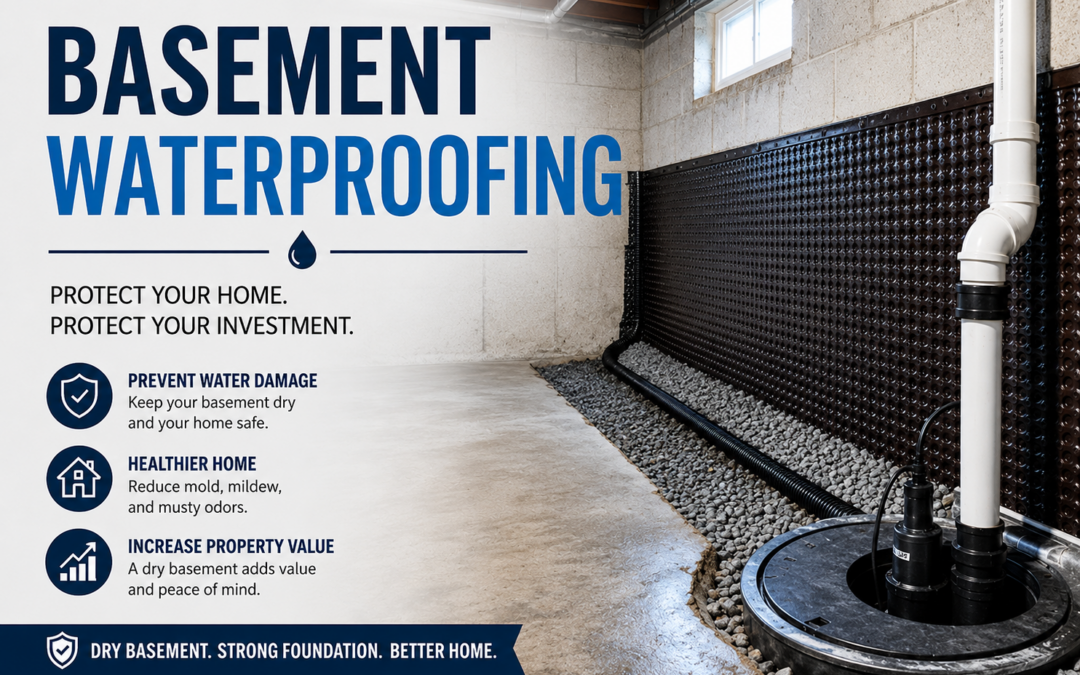
A wet basement rarely stays “fixed” for long. Water keeps finding new ways inside because pressure builds nonstop around the foundation, and that’s exactly why homeowners turn to basement waterproofing in Philadelphia after patch repairs stop working. Small fixes may look fine for a while, but the real issue sits deeper in the soil and drainage system around the home.
Why Groundwater Pressure Keeps Forcing Water Back Into Basement?
Basement moisture does not stop because the pressure outside the home never stops. Soil holds water after rain and slowly pushes it toward foundation walls. This leads to a repeating cycle:
- Pressure builds behind concrete walls
- Moisture enters through weak concrete pores
- Old repair points lose strength over time
So even if one entry point closes, the pressure simply shifts and returns elsewhere. This is why sealing alone never delivers a permanent fix for basement leaks. Water always follows the easiest new path created by pressure buildup in the soil.
Why Surface Repairs Fail To Compete With Subsurface Water Movement?
Quick fixes only treat visible damage, not the system driving it. Sealants and coatings sit on the surface, but water works underneath. They fail because they ignore groundwater movement paths, they do not reduce external soil saturation, and they leave the drainage imbalance untouched. So the basement looks repaired for a short time, but the root cause stays active below.
How Soil Saturation Around Homes Rebuilds Basement Leaks After Every Rain?
After rainfall, soil behaves like a storage system that slowly releases water toward the foundation. This process repeats after every storm cycle. Water then:
- Moves sideways toward the basement walls
- Collects in high-pressure soil zones
- Finds weak points in concrete joints
Homes needing a basement waterproofing contractor often show leaks in different basement areas after each rain cycle because soil pressure shifts continuously.
Why Basement Moisture Never Follows The Same Entry Pattern Twice?
Water does not stick to one crack or one wall. It adapts based on pressure, structure, and moisture flow paths. Common shifting patterns include floor joint seepage replacing wall cracks, window well intrusion during soil overflow, corner leaks during pressure spikes, and rising damp from the foundation base pressure. So the problem looks “random,” but it follows consistent physical pressure rules.
Why Drainage Failure Around The Property Controls Everything Inside?
Most basement moisture issues begin outside the structure. Poor drainage creates constant water buildup near the foundation. This usually happens due to:
- Roof water draining too close to the walls
- Flat yard grading holding water near the home
- Blocked or weak exterior drainage lines
Until drainage changes are made, moisture keeps cycling back into the basement regardless of interior repairs.
Why New Construction Homes Still Show Basement Water Intrusion?
New homes often assume protection, but groundwater pressure does not change with building age. Many modern basements still face moisture issues. Main reasons include rapid construction with limited drainage planning, soil settling after the home is built, and seasonal groundwater rise around foundations. So even new structures can show the same repeated dampness patterns.
How Full Waterproofing Systems Interrupt The Moisture Return Cycle?
A real waterproofing system does not chase leaks. It changes how water behaves around the home. It works by capturing water before it reaches foundation walls, redirecting flow into controlled drainage channels, and removing collected water using sump systems. This breaks the repeating cycle instead of reacting to it.
Why Early Basement Moisture Signals Should Never Be Ignored?
Basement problems usually begin quietly before they become visible damage. Early signs show that water movement has already started. Common signals include musty odor after rain exposure, damp concrete surfaces near floor lines, and white residue forming on walls. These are early indicators that pressure and seepage are already active.
How Professionals Trace The Real Source Of Basement Water Entry?
Experts don’t rely on surface leaks alone. They study how water travels through soil and structural layers. They evaluate:
- Moisture direction inside foundation walls
- Soil saturation and pressure mapping
- Drainage system performance under rainfall
This helps identify the actual system failure, not just the visible symptom, especially in homes needing basement waterproofing in Philadelphia.
Why Moisture Always Returns Without System-Level Control?
Basement water behaves like a repeating loop driven by external pressure. If that loop is not broken, repairs will always fail. Without system control:
- Pressure rebuilds after each storm
- New cracks develop in stressed areas
- Old repairs lose adhesion over time
So the issue is never a single leak. It is a continuous water movement system that needs full control. Without controlling that system, every repair only delays the next round of moisture problems.
Concluding Thoughts
Basement water issues don’t fix themselves with small repairs. They come back until the real drainage and pressure system gets handled properly. That’s why full system-based solutions matter more than surface fixes.
If you are dealing with repeat leaks or damp walls, timing matters. A proper inspection and structured repair plan can stop the cycle and protect your home from long-term damage. This is where strong, system-driven solutions make a real difference for homeowners looking for basement waterproofing in Philadelphia.
Basement Waterproofing Scientists focus on solving basement moisture from the root cause, not temporary patches. The work targets drainage, pressure control, and long-term foundation protection. The goal stays simple: stop water from coming back again and again.
Frequently Asked Questions
(1) Why does basement water keep coming back after repairs?
Because underground pressure stays active and pushes water through new weak points in foundation walls repeatedly.
(2) Can sealing cracks permanently stop basement leaks?
No, sealing only covers symptoms while groundwater pressure continues forcing water through other entry paths.
(3) What is the main cause of repeated basement moisture?
Poor drainage around the home and constant soil saturation after rainfall or seasonal water buildup.
(4) Do new homes also face basement water problems?
Yes, soil movement and groundwater pressure still cause leaks even in newly constructed homes.
(5) How do waterproofing systems stop repeated water damage?
They control water flow, reduce pressure, and redirect moisture away from foundation walls permanently.