

A basement leak that appears after a hard rain often starts several feet away from the foundation. Water may be flowing off a roof, collecting in a low section of yard, or saturating soil against the basement wall. That is why the French drain versus grading decision should not begin with a contractor’s preferred product. It should begin with identifying exactly where the water originates and how it reaches your home.
For homeowners in Greater Philadelphia, Southeast Pennsylvania, and Southern New Jersey, the right answer is often affected by older construction, dense clay soil, settled landscaping, and heavy seasonal rain. Grading can be an economical fix for surface water. A French drain can be the more dependable solution when water is moving through the soil or collecting below grade. In some cases, the permanent repair requires both.
French Drain Versus Grading: The Basic Difference
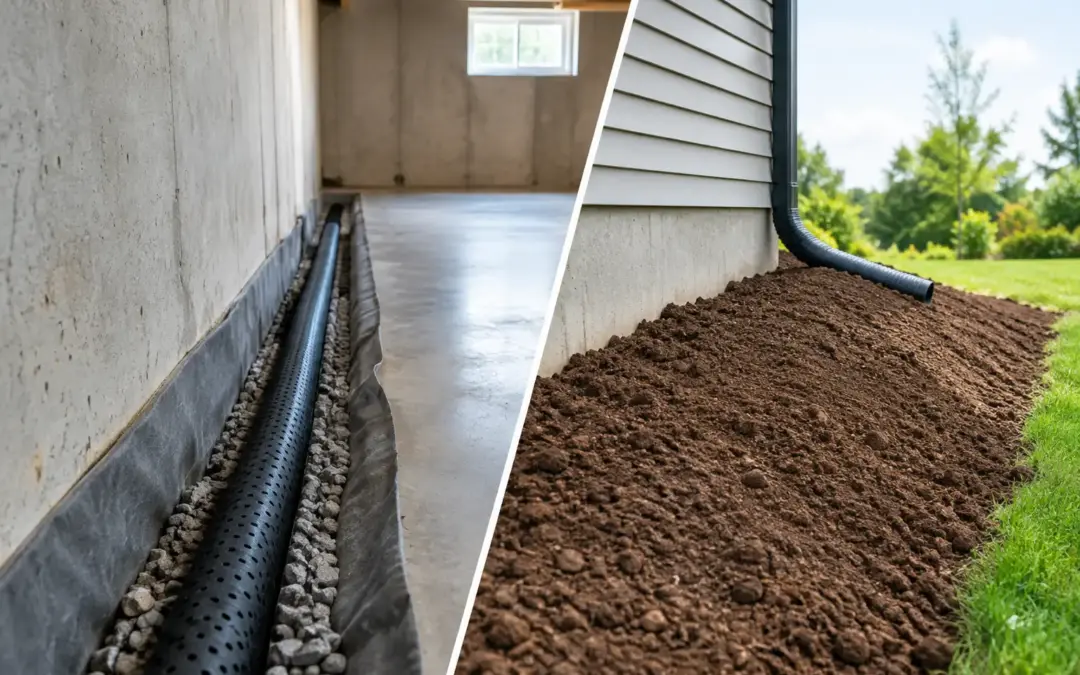
Grading changes the slope of the ground around your house. Its purpose is straightforward: direct rainwater away from the foundation before it can soak into the soil beside basement walls. Proper grading typically slopes downward away from the house, preventing water from ponding near the foundation.
A French drain collects water that is already moving through or sitting in the soil. An exterior French drain is a gravel-filled trench containing perforated pipe. It intercepts groundwater and carries it to a suitable discharge location. An interior French drain, installed below the basement floor perimeter, captures water entering at the footing and channels it to a sump pump.
Think of grading as prevention at the surface. A French drain is a collection and drainage system for water that surface corrections alone cannot control.
When Grading Is the Right First Fix
Grading is often the best place to start when the evidence points to surface runoff. If the yard slopes toward the house, mulch beds are built too high against siding, or water stands near the foundation after a storm, regrading may solve the problem without excavation around the home.
This approach makes sense when basement moisture is minor and clearly tied to rainfall. For example, you may notice dampness on one wall only after water spills from a short downspout or gathers in a settled garden bed. Extending downspouts and restoring the soil slope may keep that water from ever reaching the foundation.
Grading also works well as a supporting measure. Even if a home needs a drainage system, sending roof and yard water away from the foundation reduces the workload on that system. It is not unusual for a basement to stay dry for years because basic water management outside was handled correctly.
However, grading has limits. Soil settles, landscaping changes, and hardscapes can restrict the ability to create enough slope. A driveway, patio, neighboring property, or window well may leave water with nowhere practical to go. Simply piling soil against the house is not a proper solution. It can cover siding, trap moisture, create pest pathways, and direct water toward vulnerable wall materials.
When a French Drain Is Worth the Investment
A French drain becomes more appropriate when the water problem is below the surface or continues despite proper grading. Common signs include recurring seepage where the wall meets the floor, water entering through cove joints, hydrostatic pressure, or groundwater that rises after prolonged rain.
Homes with deep basements are especially vulnerable because the footing sits below the surrounding water table. Even a well-sloped yard cannot stop groundwater from moving toward the lower pressure area around a foundation. In these cases, the goal is not to keep every drop of water out of the soil. The goal is to relieve pressure and give that water a controlled path away from the house.
An exterior French drain may be recommended when excavation is practical and the foundation walls need direct waterproofing or repair. This method can address exterior wall cracks, failed waterproof coatings, and drainage issues at the footing. It is a significant project, but it treats the problem from the outside.
An interior French drain is often the practical choice for finished or partially accessible basements, tightly spaced homes, and properties where exterior excavation would disrupt driveways, decks, landscaping, or utilities. The system manages water after it reaches the footing level, before it can spread across the basement floor. When correctly installed with a reliable sump system, it provides a long-term route for water that naturally accumulates below grade.
Why the Same Leak Can Need Different Solutions
A wet spot does not always reveal the source. Water can travel behind finished walls, along foundation surfaces, through cracks, or under the slab before becoming visible. The stain you see may be several feet away from the actual entry point.
That is why one-size-fits-all waterproofing systems can waste money. An interior drain may be excessive for a simple downspout problem. On the other hand, a contractor who recommends only regrading without accounting for high groundwater may leave you with the same wet basement after the next extended storm.
A proper inspection should consider the timing of the leak, roof drainage, exterior slope, soil conditions, foundation age, wall cracks, sump pump performance, window wells, and plumbing lines. Scientific leak detection can help distinguish rainwater intrusion from groundwater pressure, plumbing leaks, condensation, or moisture caused by a hidden defect in the foundation.
Cost, Disruption, and Long-Term Value
Grading is usually less expensive and less disruptive than installing a French drain. It can involve moving soil, reshaping landscape beds, correcting downspout discharge, and restoring affected areas. When it addresses the true cause, it is one of the most economical repairs available.
A French drain costs more because it requires excavation, drainage materials, careful pitch, discharge planning, and often sump equipment. The investment can be justified when the alternative is repeated water damage, mold growth, damaged flooring, ruined storage, or ongoing foundation deterioration.
The key question is not which option has the lower initial price. It is which repair prevents the problem from returning. A cheap correction that fails during the next major storm is more expensive than a targeted repair completed once and backed by a meaningful guarantee.
Situations Where Both Grading and a French Drain Make Sense
Some homes have more than one water pathway. A yard may send too much surface water toward the house while groundwater also builds up around deep foundation footings. In that situation, grading reduces the volume of water arriving at the foundation, while the French drain manages the water that remains below grade.
Both solutions may also be appropriate when roof runoff is substantial, the property sits at the bottom of a slope, or the surrounding soil drains slowly. Clay-heavy soils common in parts of Pennsylvania and New Jersey can hold water for long periods after a storm. Surface improvements help, but they may not eliminate pressure at the foundation.
A combined plan does not mean every home needs the most extensive system. It means the repair should match the evidence. The best waterproofing work is precise: fix the confirmed sources, protect the vulnerable areas, and avoid unnecessary construction.
Questions to Ask Before Choosing a Drainage Repair
Before approving grading or a French drain, ask where the water is coming from, how the source was confirmed, where collected water will discharge, and what happens during a power outage if a sump pump is involved. You should also ask whether foundation cracks, failing gutters, or window wells are contributing to the issue.
Be cautious of quick recommendations made without inspecting the exterior drainage pattern and the basement conditions together. A permanent solution requires more than seeing water on a floor and prescribing a standard system. It requires understanding the path water takes through your property.
At Basement Waterproofing Scientists, inspections are built around diagnosing that path first. Whether the economical answer is correcting the grade, installing a targeted drain, repairing a wall crack, or combining solutions, the objective is the same: stop water at its source and protect the basement for the long term.
If your basement leaks after rain, do not wait for another storm to make the damage worse. A careful inspection can turn a frustrating water problem into a specific, manageable repair plan.