

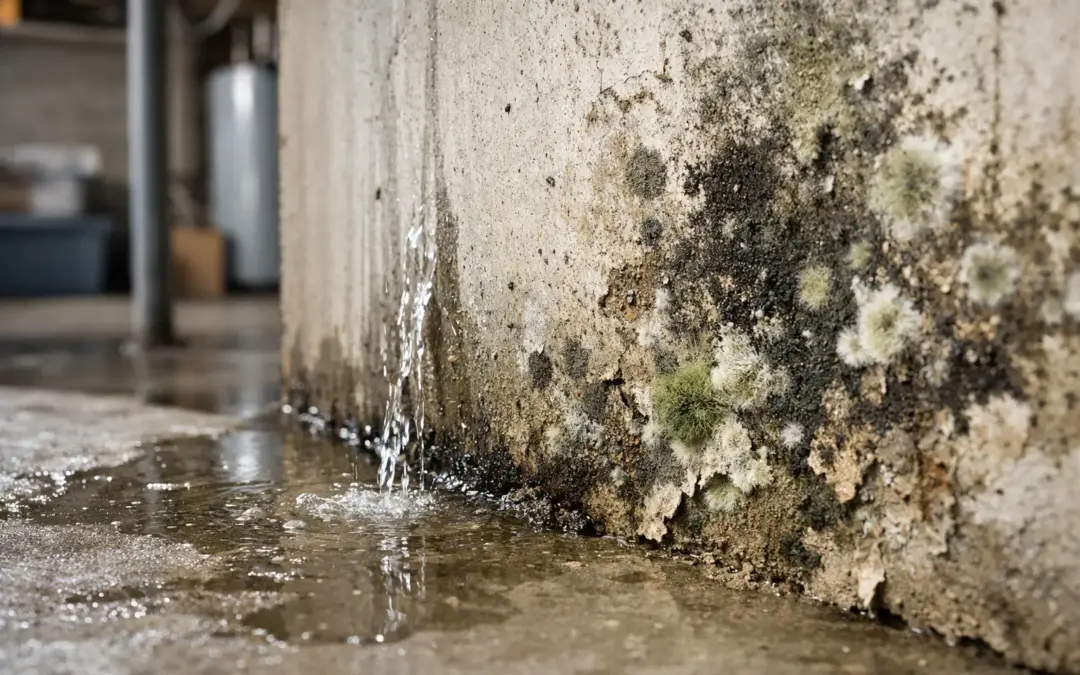
A small wet spot below a basement window can look like a minor cleanup job. But if that spot returns after every heavy rain, moisture may already be moving into materials behind finished walls, under flooring, or along the foundation. Can basement leaks cause mold? Yes. Even a slow or occasional leak can create the damp conditions mold needs to grow.
For homeowners in Greater Philadelphia, Southeast Pennsylvania, and Southern New Jersey, this is especially common in older homes with aging foundations, clogged exterior drainage, or previous water repairs that treated the symptom instead of the source. The good news is that a mold problem is often preventable when the leak is diagnosed and corrected early.
Why basement leaks create mold conditions
Mold is naturally present in the environment. It becomes a concern indoors when it finds moisture and a food source. Basements provide plenty of materials that can support growth, including wood framing, drywall paper, carpet backing, insulation, cardboard storage boxes, and dust on concrete surfaces.
A foundation leak does not have to flood the basement to create a problem. Water can enter through a wall crack, the joint where the floor meets the wall, a failed window well, a utility penetration, or a poorly sealed exterior opening. It may then evaporate slowly into the basement air or soak into porous building materials.
When humidity stays elevated or materials remain wet for more than a day or two, mold can begin developing. The visible stain homeowners notice is sometimes only a small part of the issue. Moisture may be trapped behind paneling, finished basement walls, or flooring long before it becomes obvious.
Can basement leaks cause mold even if the basement looks dry?
Yes. A basement can feel dry on most days and still have an active moisture problem. Intermittent leaks are particularly deceptive because they occur only during certain conditions, such as wind-driven rain, spring thaw, a rising water table, or a backed-up gutter.
Some leaks travel. Water entering near one corner of the foundation may run behind a finished wall and appear several feet away. A damp smell near a staircase, a discolored baseboard, or a recurring patch of peeling paint may be the only visible clue.
Condensation can also add to the problem. Cool foundation walls and pipes can collect moisture from humid summer air. While condensation is different from groundwater intrusion, both can raise basement humidity and support mold growth. The right repair depends on the actual cause. Applying a waterproof coating to a condensation issue, or running a dehumidifier while ignoring a wall crack, may provide temporary relief without delivering a permanent result.
Warning signs that a leak may be feeding mold
A musty odor is one of the most common early signs. It often becomes stronger after rain or when the basement has been closed for a few days. Other clues include visible spotting on walls or stored belongings, warped baseboards, bubbling paint, rusted metal items, damp carpeting, or white mineral deposits on masonry walls.
Pay attention to patterns. If the same area becomes damp after storms, if stored boxes feel soft or smell stale, or if a dehumidifier fills unusually fast, there is likely more moisture present than the basement should have.
Not every dark mark is mold. Dirt, old water staining, and mineral deposits can look similar. Likewise, visible mold does not identify the source of moisture. Accurate mold testing and leak detection can help separate assumptions from facts, especially when growth may be concealed behind finished materials.
The leak source matters more than the visible mold
Cleaning visible mold without stopping the water source is rarely a lasting fix. Mold can return because the wall, framing, or floor remains damp after cleanup. That is why the first question should not be, “What product removes the stain?” It should be, “Where is the water coming from?”
Common basement moisture sources include:
- Cracks in poured concrete or masonry foundation walls
- Water entering at the floor-to-wall joint
- Failing exterior grading that directs rainwater toward the home
- Overflowing gutters or downspouts that discharge too close to the foundation
- Window well drainage problems
- Plumbing leaks, appliance leaks, or damaged supply lines
- High indoor humidity and condensation on cold surfaces
These conditions can overlap. For example, poor grading may increase hydrostatic pressure around the foundation, allowing water to exploit a small wall crack. A finished basement can then hold that moisture against drywall and wood framing, creating ideal conditions for hidden mold.
What to do when you find a basement leak
First, protect the area from additional damage. Move cardboard boxes, upholstered furniture, and other absorbent belongings away from the wet location. If water is actively entering, contain it where possible and document when and where it appears. Photos taken during or shortly after rain can be useful during an inspection.
Then dry the area promptly. Fans and a dehumidifier can help reduce moisture after a minor event, but they are not a substitute for repair. If carpet padding, insulation, drywall, or other porous materials stayed wet for an extended period, they may need professional evaluation. Some materials can be dried and saved; others can hold moisture and contamination too deeply to be reliably restored.
Avoid covering the evidence with paint, caulk, or new paneling before the source is identified. These cosmetic fixes often hide the symptom while water continues moving through the structure. They can also make a future inspection more difficult and allow a smaller repair to become a larger remediation project.
How a targeted waterproofing diagnosis prevents recurrence
Basement water problems are not one-size-fits-all. An interior drain system may be appropriate for one home, while another needs crack repair, exterior drainage correction, window well work, or a focused repair at a single penetration. The most economical permanent solution is the one that addresses the actual path of water.
A scientific inspection looks at more than the stain on the wall. It considers the home’s grading, downspout discharge, foundation construction, crack pattern, drainage conditions, and the timing of the leak. State-of-the-art leak detection scanning can help locate hidden moisture and narrow down the intrusion point without guessing or recommending unnecessary work.
At Basement Waterproofing Scientists, the goal is to identify the cause first and prescribe a repair that makes sense for the home and budget. That approach helps homeowners avoid paying for a generic waterproofing package when a targeted repair can solve the problem permanently.
When mold remediation should come before rebuilding
If mold growth is widespread, if damp materials are hidden behind finished walls, or if a leak has been recurring for months, professional remediation may be needed before repairs and reconstruction. Remediation is more than spraying a cleaner. It can involve containing the affected area, removing damaged porous materials, cleaning remaining surfaces, and confirming that moisture has been controlled.
Waterproofing and remediation should work together. Removing mold while leaving an active leak is incomplete. Repairing the leak while leaving significantly affected materials in place can also leave the basement with odors, staining, or ongoing concerns. The order of work depends on the extent of damage, but the moisture source must be resolved for any cleanup to last.
Do not wait for a major flood
A basement leak is a building condition, not just a housekeeping inconvenience. The sooner it is investigated, the more likely the repair can be contained to the source before moisture damages finishes, stored belongings, or indoor air quality.
If your basement smells musty, develops damp spots after rain, or shows recurring staining near the foundation, schedule a professional inspection before closing the wall back up or replacing damaged flooring. A dry, usable basement starts with finding the exact path of water and fixing it right.