

Why Basement Wall Leak Repair Should Be Your Top Priority
Basement wall leak repair is critical for protecting your home’s foundation, preventing mold growth, and maintaining your property’s value. If you’re dealing with a leaky basement wall, here’s what you need to know:
Quick Answer: How to Fix a Basement Wall Leak
- Identify the source – Look for water stains, efflorescence (white powder), peeling paint, or musty odors
- Assess the severity – Small hairline cracks may be DIY-friendly, but horizontal cracks or widespread leaking needs a professional
- Choose your repair method – Interior sealants work for minor dampness, but active leaks require professional crack injection or drainage systems
- Address exterior issues – Fix gutters, downspouts, and grading to prevent water from reaching your walls
- Consider professional help – For permanent solutions with warranties, especially if DIY attempts have failed
Average Cost: Professional basement waterproofing typically ranges between $4,000 and $8,000, depending on the severity and repair method needed.
That sinking feeling when you spot a damp patch on your basement wall is all too familiar. You’re not alone – over half of all basements experience some form of moisture issues. Whether it’s a small wet spot that appears after heavy rain or an active leak streaming down your wall, basement wall leak repair is something you can’t afford to put off.
The good news? Most basement wall leaks can be fixed. The key is understanding where the water is coming from and choosing the right repair method for your specific situation.
This guide walks you through everything you need to know about basement wall leak repair. You’ll learn how to identify the source of your leak, understand what’s causing it, and decide between DIY fixes and professional solutions. We’ll also cover the real costs involved and how to prevent leaks from coming back.
Why act now? Water damage doesn’t wait. Mold can start growing within 24 to 48 hours of moisture exposure. Foundation damage can cost up to $15,000 if left unchecked. The longer you wait, the more expensive the fix becomes.
I’m Darin Garvey, and I’ve spent over 30 years diagnosing and repairing basement wall leaks in the Philadelphia area through Basement Waterproofing Scientists. I’ve seen every type of basement wall leak repair scenario imaginable, from simple hairline cracks to complex foundation issues, and I’ll share what actually works. Let’s start by understanding what causes these leaks and how to spot them early.
Identifying the Leak: Signs, Causes, and Consequences
Before we can fix a leak, we need to find it! Sometimes, the source is obvious, like a gushing stream. Other times, it’s a sneaky culprit that only shows its face after a heavy downpour. Here are the common indicators that your basement wall might be leaking, even if you don’t see a full-blown waterfall:
- Water stains: These are often the first visual clue, appearing as discoloration on walls or floors.
- Peeling or bubbling paint: If your basement walls are painted, moisture behind the surface can cause the paint to lose adhesion and peel away.
- Visible mold or mildew: Mold thrives in damp environments and can appear as fuzzy, discolored patches. This is a serious health concern.
- Musty odors: A persistent musty smell is a strong indicator of moisture and potential mold growth, even if you can’t see it.
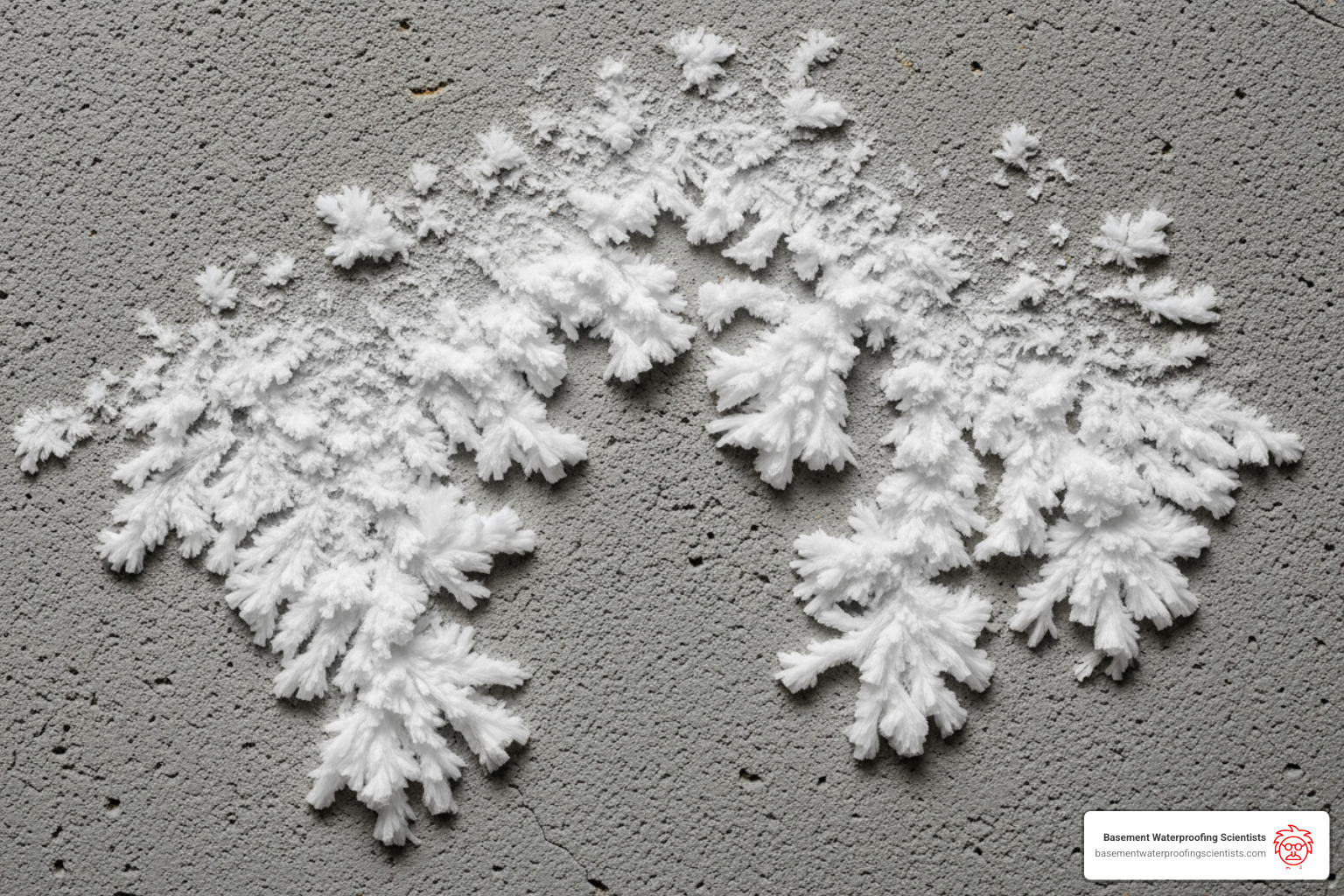
- Efflorescence: This is a white, powdery, crystalline deposit that forms on concrete or masonry surfaces. It’s caused by water passing through the material, dissolving mineral salts, and then evaporating, leaving the salts behind. Think of it like the residue left in a pot after boiling water – a clear sign water has been there!
- Bowing or cracking walls: These are more serious structural signs, indicating significant pressure or movement.
The Root Causes of a Leaky Basement Wall
Why do these leaks happen? It’s usually a combination of factors related to how your home interacts with its environment.
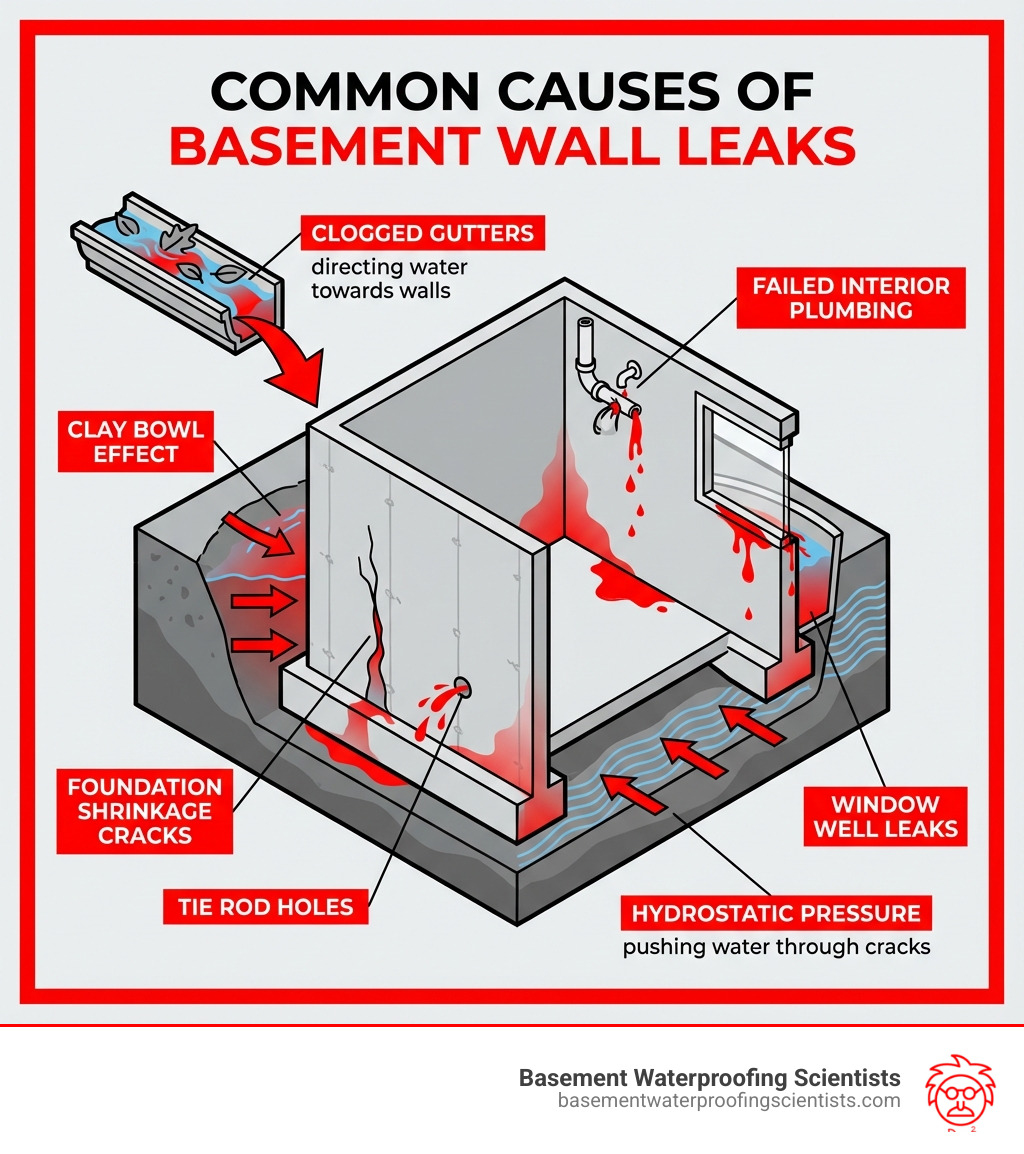
- Hydrostatic pressure explained: Imagine the soil around your foundation getting completely saturated after a heavy rain or snowmelt. This creates immense pressure, called hydrostatic pressure, against your basement walls and floor. Concrete is porous, and this pressure can literally force water through tiny cracks, seams, and even the concrete itself. It’s like a giant underground hand pushing water into your home.
- The “Clay Bowl Effect” around your foundation: When your house was built, a hole was dug for the foundation, and then backfilled with soil. This backfilled soil is often looser and more permeable than the original, undisturbed soil around it. This creates a “clay bowl” effect, where water can collect and become trapped around your foundation, increasing hydrostatic pressure.
- Poor exterior water management: clogged gutters, improper grading, and downspout issues: This is often the easiest fix, yet one of the most common causes. Hundreds, even thousands, of gallons of water can fall on your roof during a single rainfall. If your gutters are clogged or your downspouts don’t extend far enough (at least 10 feet) from your foundation, all that water dumps directly next to your basement walls. Similarly, if the ground around your house doesn’t slope away from the foundation (we recommend at least 6 inches of slope over the first 10 feet), water will pool and seep into the soil right where you don’t want it.
- Foundation flaws: shrinkage cracks, tie rod holes, and window well leaks:
- Shrinkage cracks: Concrete can shrink as it cures, leading to hairline cracks. While often not structural, these can be pathways for water. Concrete shrinkage can continue for up to ten years after construction.
- Tie rod holes: These are small, circular holes left over from the construction process where form ties (steel rods) were used to hold the concrete forms together. If not properly sealed, they are perfect entry points for water.
- Window well leaks: If your basement windows are below ground level, they usually have window wells. If these wells don’t drain properly or are poorly sealed, water can collect and leak directly into your basement.
- Internal sources: plumbing failures and appliance leaks: Sometimes, the water isn’t coming from outside at all! Failing water heaters (which typically last 6-12 years) or damaged washing machine hoses can lead to significant water pooling in your basement. Leaks at valves often require a professional, but we homeowners can sometimes tighten leaky connections ourselves.
Why You Can’t Afford to Ignore a Wall Leak
Ignoring a basement wall leak is like ignoring a small cavity in your tooth – it will only get worse and much more expensive.
- Consequences of inaction: A leaky basement isn’t just an inconvenience; it’s a threat to your home’s integrity and your family’s health.
- Structural damage: Water infiltrating your foundation can lead to foundation weakening over time. This can cause severe structural issues like bowing or buckling walls, which might require extensive repairs costing up to $15,000 if ignored. The cost to repair foundation cracks alone typically ranges from $1,500 to $3,000.
- Health hazards: As we mentioned, mold and mildew can begin to grow within 24 to 48 hours of moisture exposure. This can cause respiratory issues, allergies, and other health problems, as outlined by the Environmental Protection Agency (EPA). Professional mold remediation can vary widely, from $500 to $6,000, depending on the extent of the growth.
- Damage to property and decreased home value: Your stored belongings, furniture, and even finished basement materials can be ruined by water. A wet, musty basement also makes your house less appealing and can significantly decrease its market value. A wet basement can even make a house difficult or impossible to sell.
Choosing Your Repair Path: DIY Patching vs. Professional Basement Wall Leak Repair
Once you’ve identified a leak and its likely cause, the next step is deciding on a repair strategy. Should you roll up your sleeves and tackle it yourself, or is it time to call in the experts? Let’s compare.
| Feature | DIY Patching (e.g., basic crack filling, waterproof paint) | Professional Basement Wall Leak Repair (e.g., Basement Waterproofing Scientists) |
|---|---|---|
| Cost | $200 – $3,000 (for interior sealants/materials) | $4,000 – $8,000 (average for waterproofing) |
| Durability | Often temporary, prone to re-failure | Long-term, permanent solutions |
| Invasiveness | Low (interior surface application) | Moderate to High (crack injection, interior drainage, exterior excavation) |
| Long-Term Effectiveness | Limited, addresses symptoms not root cause | High, addresses root cause, often with warranties |
DIY Basement Wall Leak Repair: What You Can (and Can’t) Do
For minor dampness or very small, non-structural hairline cracks, a DIY approach might offer a temporary reprieve.
- Wall preparation: Before applying any sealant, the area must be clean and dry. We recommend scoring around the leak with a razor knife and using a chisel to remove any old sealant or loose concrete. Then, clean the damaged area thoroughly to ensure good adhesion for your new material.
- Essential safety gear and tools: When working with chemicals like hydraulic cement, safety is paramount. Always wear protective gloves and a protective dust mask. A wire brush is useful for cleaning surfaces, and a chisel helps prepare the crack.
- Applying patching materials for minor, non-structural cracks: For very small hairline cracks, an epoxy or latex cement mixture might suffice. For slightly larger cracks (up to 1/8-inch), hydraulic cement is a popular choice. This material expands as it dries, creating a waterproof seal. Hydraulic cement sets very fast, so mix small batches and work quickly!
- Using waterproof coatings for minor dampness (not active leaks): Products like UGL Drylock can be painted onto basement walls. These coatings can help with minor dampness and improve aesthetics. However, it’s crucial to understand their limitations.
- Limitations of DIY methods: While satisfying for a weekend warrior, DIY methods are often temporary. They typically only address the symptom (the visible leak) rather than the underlying cause (like hydrostatic pressure).
The Limitations of DIY and Interior-Only Fixes
We’ve seen countless homeowners attempt DIY or interior-only fixes, only to be disappointed when the water returns. Here’s why these methods often fall short:
- Why DIY and interior-only fixes are often temporary: Interior sealants and waterproof paints are generally a “negative-side” waterproofing solution. They are applied to the inside surface of the wall, attempting to hold back water that is pushing from the outside. This is like putting a band-aid on a dam.
- Trapping moisture within the concrete wall: While interior sealants might stop water from entering your basement, they don’t stop water from entering the wall itself. This means moisture can still be trapped within the concrete, potentially leading to further deterioration of the wall over time.
- Does not relieve external hydrostatic pressure: The fundamental problem of hydrostatic pressure pushing against your foundation remains unaddressed. The water will continue to seek the path of least resistance, and often finds a new weak spot to leak through.
- Potential for leaks to reappear elsewhere: Because the external pressure isn’t relieved, water often finds a new crack or weak point to exploit, leading to a frustrating game of “whack-a-mole” with your leaks.
- Interior coatings are best used as part of a comprehensive waterproofing system: While handy for minor dampness, interior coatings are rarely a permanent or solitary solution. They are most effective when combined with an interior drainage system and sump pump that manage the water before it can push through the wall.
When to Call a Professional
Sometimes, the leak is telling you it’s time to bring in the big guns. For any of our neighbors in Pennsylvania, New Jersey, or Delaware, especially in areas like Philadelphia, Reading, or Norristown, we recommend calling a professional when you see:
- Large, horizontal, or stair-step cracks: These are red flags. Wall cracks that you can slide a quarter into, or any horizontal cracks, indicate significant foundation movement or pressure. Stair-step cracks in block walls also signal a bigger problem. These are not DIY territory.
- Bowing or buckling walls: If your basement walls are visibly curving inward, this is a serious sign of structural stress from external pressure.
- Widespread water intrusion: If water is coming in through multiple spots, or if you have a significant amount of water on your basement floor, a comprehensive solution is needed.
- The source of the leak is a mystery: If you’ve checked the usual suspects (gutters, grading) and still can’t pinpoint where the water is coming from, our specialized equipment can help identify the exact leak source.
- After failed DIY attempts: Don’t beat yourself up. Many DIY fixes are temporary. If your efforts haven’t worked, it’s time for an expert diagnosis and a permanent solution.
- For a permanent, warrantied solution from a qualified local basement waterproofing specialist like Basement Waterproofing Scientists: We offer customized solutions and a lifetime guarantee, giving you true peace of mind.
The Ultimate Guide to Basement Wall Leak Repair Methods
When it comes to truly stopping a basement wall leak, we believe in long-term solutions that address the root cause, not just the symptom. This often involves a multi-pronged approach that goes beyond a simple patch.

Professional Basement Wall Leak Repair Solutions
At Basement Waterproofing Scientists, our approach is built on 30 years of experience and specialized knowledge.
- Comprehensive inspection and diagnosis: The first step to any effective basement wall leak repair is a thorough inspection. We use specialized equipment to accurately diagnose the source of your leaks. A professional foundation inspection typically costs between $300 and $1,000, but it’s an investment that can prevent much costlier repairs down the line.
- Professional crack repair using epoxy or polyurethane injection: For cracks, we don’t just patch; we seal.
- Epoxy injection: This is ideal for structural cracks, as epoxy products are incredibly strong and can restore the integrity of the concrete.
- Polyurethane injection: For actively leaking cracks or shrinkage cracks, polyurethane is often the preferred choice. It’s flexible, allowing for minor foundation movement, and expands to create a watertight seal.
- Application of advanced waterproofing membranes and coatings: For exterior waterproofing, robust membranes are installed before construction to capture water and direct it to foundation drains, preventing hydrostatic pressure buildup. For existing homes, this can involve excavation, which is labor-intensive and can cost $100 to $300 per linear foot.
- Installation of interior drainage systems and sump pumps (where appropriate): For many homes, especially those with persistent hydrostatic pressure, an interior drainage system is key. We install perimeter trenches leading to a sump pump. A sump pump collects water and pumps it safely away from your home. Sump pump installation can range from $560 to $3,500. For concrete block walls, we can even drill weep holes at the base of the blocks to drain water from the internal cavities into the drainage system.
- Addressing exterior water management issues as part of a holistic approach: We always emphasize that interior solutions are most effective when exterior issues are also addressed. This includes ensuring proper grading, clean gutters, and extended downspouts. A holistic approach is truly the most effective and permanent basement wall leak repair.
Why Professional Repair Is the Most Effective Long-Term Solution
Choosing professional basement wall leak repair with Basement Waterproofing Scientists offers unparalleled advantages:
- Permanent repair of the source of leaks: We don’t just stop the water; we identify and eliminate the underlying causes, ensuring a lasting solution.
- Solutions custom to your specific foundation and water problem: Every basement is unique. Our 30 years of experience allows us to design customized solutions custom to your home’s specific needs, whether you’re in Pottstown, Bensalem Township, or King of Prussia.
- Warrantied work for peace of mind: We stand by our work with a lifetime guarantee, giving you confidence that your basement will stay dry.
- Use of specialized equipment and materials not available to DIYers: From diagnostic tools to industrial-grade sealants and drainage systems, we use professional-grade equipment and materials that ensure superior and long-lasting results. Our unique selling point is our specialized equipment to identify leak sources to fix leaks for less.
Budgeting for a Dry Basement and Preventing Future Leaks
Investing in a dry basement is investing in your home’s health and value. While the initial cost might seem daunting, it’s far less than the cost of ignoring the problem.
Budgeting for Basement Wall Leak Repair: What to Expect
- Average cost for professional waterproofing: The average cost for comprehensive basement waterproofing, including basement wall leak repair, typically falls between $4,000 and $8,000. This range reflects the varying severity of leaks and the different methods required.
- Foundation crack repair costs: Repairing foundation cracks specifically can cost between $1,500 and $3,000, depending on the severity, location, and the repair method chosen (e.g., crack injection vs. exterior excavation).
- A professional foundation inspection can cost between $300 and $1,000: This initial investment is crucial. It helps identify structural damage early, preventing more costly repairs down the line.
- Factors influencing cost: basement size, repair method, and severity of the problem: A smaller basement with a single hairline crack will naturally cost less than a large basement with multiple bowing walls and widespread water intrusion. Exterior excavation, for instance, is labor-intensive and adds significantly to the cost.
Proactive Prevention to Avoid Future Leaks
Once your basement is dry, the goal is to keep it that way! Prevention is always cheaper (and less stressful) than repair.
- Regular gutter and downspout maintenance: Keep your gutters clear of debris. Ensure downspouts extend at least 10 feet away from your foundation. Consider gutter guards to reduce clogging.
- Ensuring proper yard grading slopes away from the foundation: Check that the ground around your home slopes away from the foundation at a rate of at least 6 inches over the first 10 feet. This directs surface water away from your basement walls.
- Installing and maintaining window well covers: If you have basement windows below grade, ensure their window wells are clean and have proper drainage. Installing sturdy covers can prevent debris and water from accumulating.
- Annual basement inspections: Make it a habit to inspect your basement regularly, especially after heavy rains or snowmelts. Look for any new cracks, damp spots, or musty odors. Early detection is key!
- A comprehensive guide on preventing leaks: We offer detailed advice on all aspects of basement moisture control, from managing humidity with dehumidifiers to ensuring your HVAC system isn’t contributing to moisture issues.
Frequently Asked Questions about Basement Wall Leaks
Can I just use waterproof paint to fix my leaky basement wall?
We often hear this question, and while waterproof paint can seem like an appealing DIY solution, it’s generally not effective for active leaks or persistent moisture problems. Waterproof paint acts as a temporary barrier for minor dampness, but it won’t stop water being driven by hydrostatic pressure. That pressure will eventually cause the paint to bubble, peel, and fail, leaving the underlying problem unaddressed. Interior coatings are best used as part of a comprehensive waterproofing system, not as a standalone fix for a leaking wall.
How can I tell if a wall crack is a serious structural problem?
Not all cracks are created equal. Hairline vertical cracks are often less severe and can be a result of normal concrete shrinkage. However, you should be concerned and seek professional assessment for:
- Horizontal cracks: These typically indicate significant pressure from the outside soil pushing inward on the foundation.
- Large, jagged, or stair-step cracks: If a crack is wide enough to slide a quarter into, or if you see cracks running in a “stair-step” pattern in a block foundation, it often signals foundation settlement or shifting.
- Cracks accompanied by bowing or bulging walls: This is a clear sign of structural compromise.
For any of these serious crack types, especially in our service areas like Haverford Township or Radnor Township, we highly recommend a professional inspection.
Will my homeowner’s insurance cover a basement wall leak?
This is a tricky one, and the answer often depends on the source of the water and your specific policy. Generally, homeowner’s insurance policies cover sudden and accidental water damage, such as a burst pipe or a malfunctioning water heater. However, damage from gradual seepage, chronic leaks, poor maintenance, or flooding (which requires separate flood insurance) is typically excluded. We always advise our clients to check their specific policy and consult with their insurance provider to understand their coverage.
Conclusion: Secure Your Foundation and Your Peace of Mind
The journey to a dry, healthy basement starts with correctly identifying the water source and choosing a permanent solution over a temporary patch. While DIY fixes can offer short-term relief for minor issues, they often fail to address the root causes of basement wall leak repair, leading to recurring problems and potentially more expensive damage down the road.
The long-term value of professional basement wall leak repair cannot be overstated. It protects your home’s structural integrity, safeguards your health by preventing mold, preserves your belongings, and maintains your property’s value. At Basement Waterproofing Scientists, we combine our 30 years of experience with specialized equipment to accurately diagnose leaks, ensuring an effective and cost-efficient repair that lasts.
Don’t let a leaky basement dampen your spirits or jeopardize your home. For a professional assessment and a guaranteed dry basement, learn more about our basement wall crack repair services. We’re here to help our neighbors across Pennsylvania, New Jersey, and Delaware, from Ardmore to Warminster Township, achieve lasting peace of mind.