

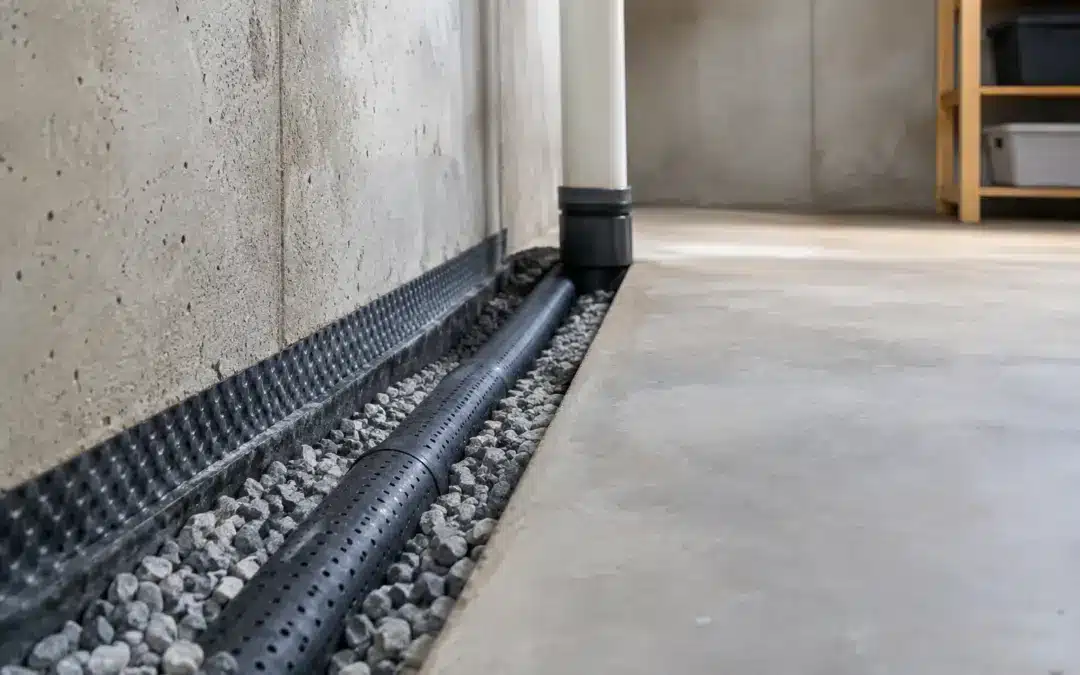
A wet basement rarely starts with a dramatic flood. More often, it begins with a damp line along one wall after heavy rain, a musty odor near stored boxes, or white mineral deposits on concrete. Effective basement drainage addresses the water pressure and water pathways causing those warning signs before they become damaged finishes, mold growth, or foundation concerns.
For homes across Greater Philadelphia, Southeast Pennsylvania, and Southern New Jersey, drainage problems are especially common. Older foundations, clay-heavy soils, changing grades, aging gutters, and strong seasonal storms can all direct too much water toward the house. The right repair is not always a full perimeter system. It depends on where the water starts, how it moves through the soil, and where it enters the basement.
What Basement Drainage Is Designed to Do
Basement drainage is the system that collects and redirects groundwater and surface water away from your foundation. Its job is simple: keep water from building up against basement walls and beneath the slab.
When soil around a foundation becomes saturated, it creates hydrostatic pressure. That pressure can force water through cracks, cold joints, porous concrete, utility penetrations, and the seam where the wall meets the floor. Even a structurally sound wall can leak when enough water is pressing against it.
A properly designed drainage solution lowers that pressure. Depending on the source of the problem, this may involve correcting surface drainage outside, installing an interior drainage channel, adding or replacing a sump pump, or using a combination of measures. The goal is not to hide moisture. It is to control the water permanently and direct it to a safe discharge point.
Start With the Source, Not a Standard Package
A drainage system can be an excellent investment, but only when it addresses the actual failure. Installing a large interior system when roof runoff is dumping beside the foundation may add unnecessary cost without correcting the primary cause. On the other hand, extending downspouts alone will not solve a persistent groundwater issue beneath the basement floor.
A precise inspection should determine whether water is entering from above grade, below grade, through a wall crack, at a floor-wall joint, or around a pipe penetration. It should also identify whether the moisture is active only during storms, appears during snowmelt, or remains constant throughout the year.
At Basement Waterproofing Scientists, scientific leak detection scanning helps pinpoint active moisture paths instead of relying on assumptions. That diagnostic approach matters because two basements can show the same wet spot while requiring completely different repairs. A targeted solution often saves homeowners from paying for work their home does not need.
Surface Water Problems
Surface water is rainwater that reaches the foundation from the roof, driveway, patio, yard, or neighboring grade. It is one of the most preventable causes of basement leaks.
Gutters that overflow, downspouts that end near the house, and soil that slopes toward the foundation can saturate the area around basement walls quickly. A low spot beside the home can act like a collection basin during storms. Water then follows cracks, gaps, and porous areas into the basement.
Correcting surface drainage may include cleaning and repairing gutters, extending downspouts well away from the foundation, adjusting grading, or addressing hardscape that directs water toward the house. These measures are often economical, but they must be evaluated in context. If groundwater is also rising beneath the slab, exterior improvements may be only one part of the solution.
Groundwater and Hydrostatic Pressure
Groundwater problems are different. Water may collect below the surface even when the yard appears dry. This often occurs in low-lying areas, homes with poorly draining soil, or properties where water naturally moves toward the foundation after prolonged rainfall.
Common clues include water emerging at the floor-wall seam, dampness along multiple walls, recurring puddles after storms, and a sump pump that runs frequently. In these cases, an interior drainage system can be the most practical approach. It relieves pressure from beneath the slab and channels incoming water to a sump basin for removal.
Interior systems are often less disruptive than excavation and can be installed without disturbing landscaping, driveways, or patios. However, quality matters. The system must have a clear collection path, a properly sized basin, dependable pump capacity, and a discharge line that carries water far enough away that it does not return to the foundation.
The Parts of an Effective Drainage System
A drainage repair is only as reliable as its weakest component. A strong system typically includes several parts working together, not just a drain or pump installed in isolation.
An interior drainage channel collects water at the perimeter where pressure is most likely to release. A sump basin receives that water and gives the pump a protected place to operate. The sump pump moves water out through a discharge line, while a check valve prevents pumped water from flowing backward into the basin. A battery backup pump can provide critical protection during a power outage, which is often when heavy storms are most likely to cause trouble.
Outside the home, gutters, downspouts, splash control, and proper grading reduce the amount of water that reaches the foundation in the first place. For some homes, an exterior footing drain or targeted exterior waterproofing repair is appropriate. This work can be highly effective, but excavation is more invasive and may not be necessary for every leak.
The best option comes down to access, soil conditions, the location of the leak, the foundation type, and the homeowner’s long-term plans for the basement. A finished basement may require a different strategy than an unfinished storage area, especially if preserving flooring and wall finishes is a priority.
Warning Signs Your Drainage Needs Attention
Do not wait for standing water to take basement moisture seriously. Early signs often reveal a drainage problem before major damage occurs:
- Water or dampness at the base of basement walls after rain
- White, chalky mineral deposits known as efflorescence
- Musty odors, mold growth, or consistently high humidity
- Cracks that leak during storms or snowmelt
- A sump pump that runs constantly, makes unusual noise, or fails to run
These symptoms do not automatically mean the foundation is failing. They do mean water is reaching areas where it should not be. Prompt diagnosis can prevent damaged drywall, ruined flooring, deteriorated insulation, and poor indoor air quality.
Why Temporary Fixes Often Fail
Waterproof paint, caulk, and crack fillers can have a role in minor, isolated repairs. They are not a substitute for drainage when water pressure is the underlying issue. If moisture is building outside or below the foundation, a surface coating may eventually blister, peel, or allow water to find another route.
The same is true of repeatedly mopping a wet basement or running a dehumidifier without correcting the source. A dehumidifier can improve comfort and help control humidity, but it does not remove groundwater pressure or redirect roof runoff. It treats the indoor symptom, not the exterior cause.
A permanent repair begins with finding the first point of failure. Sometimes that is a crack repair combined with better drainage. Sometimes it is an interior system and sump pump. Sometimes the most economical solution is a straightforward downspout and grading correction. Honest recommendations should match the evidence, not a one-size-fits-all sales package.
Protecting the System After Installation
Once drainage is working properly, basic maintenance helps it stay dependable. Test the sump pump periodically by pouring water into the pit and confirming that it activates, pumps out, and shuts off normally. Keep the pit clear of debris, inspect the discharge line for blockages, and make sure its outlet remains open during freezing weather.
Clean gutters regularly and check that downspout extensions have not shifted, cracked, or been removed. Watch the soil around the foundation after landscaping work, since added mulch or new plantings can quietly change the slope toward the house. If a battery backup is installed, follow the manufacturer’s schedule for checking and replacing the battery.
A dry basement should feel like a protected part of the home, not a space you monitor every time rain is in the forecast. When moisture appears, the most useful next step is a careful inspection that follows the water back to its source. That is how homeowners get a repair that is practical, economical, and built to last.