

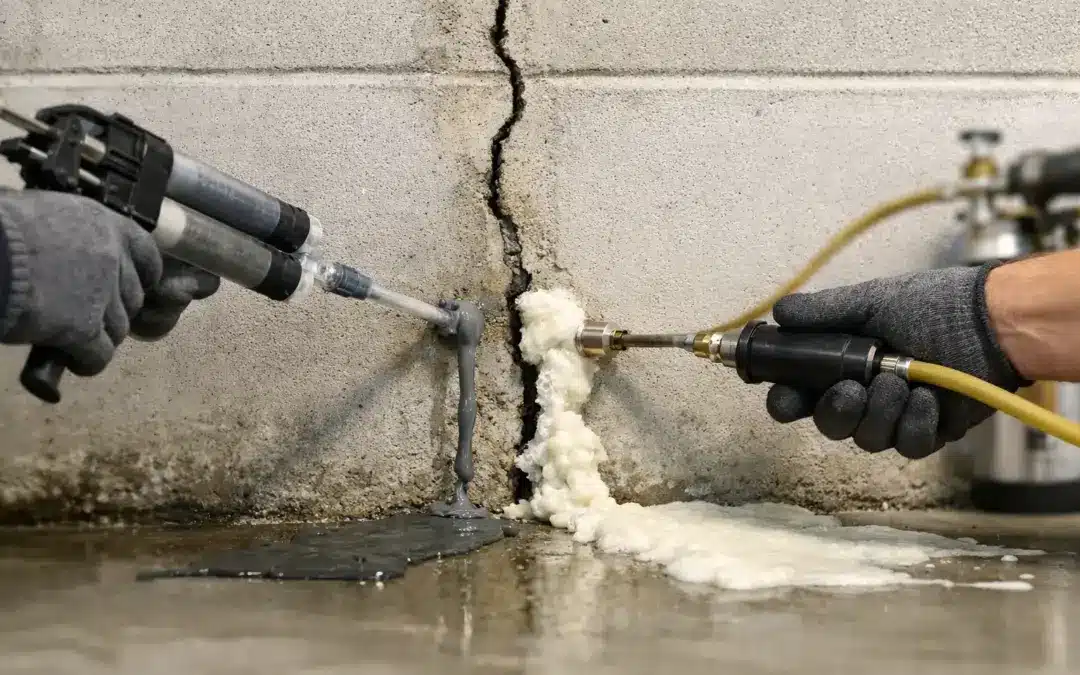
A basement wall crack can look minor until the next hard rain leaves a wet line on the floor, peeling paint, or a musty smell behind stored boxes. When comparing epoxy vs polyurethane injection, the right choice is not about picking the stronger-sounding material. It is about identifying what the crack is doing, where the water is entering, and whether the wall needs structural repair, leak sealing, or both.
For homeowners in Greater Philadelphia, Southeast Pennsylvania, and Southern New Jersey, that distinction matters. Our region has clay soils, freeze-thaw cycles, aging masonry, and heavy rain events that can turn a small foundation crack into a recurring water problem. A targeted diagnosis prevents you from paying for a broad waterproofing system when a precise crack repair is the permanent, more economical answer.
Epoxy vs Polyurethane Injection: The Core Difference
Both epoxy and polyurethane are injected into foundation cracks under controlled pressure. The material travels through the crack and cures inside the wall rather than simply covering the visible surface. That is why professional injection repair is generally more reliable than applying hydraulic cement, caulk, or a surface sealant over a crack.
The difference is in how the materials behave after installation.
Epoxy injection is a rigid structural adhesive. Once cured, it bonds the sides of a crack together and can restore strength across the damaged section of concrete. It is most appropriate when the crack is dry or can be kept dry during repair, and when there is reason to believe the crack is stable and structural reinforcement is the primary goal.
Polyurethane injection is designed to stop water. Depending on the formula, it can react with moisture and expand into a flexible foam or cure as a flexible resin. That flexibility allows it to seal cracks that may experience slight seasonal movement. It is often the preferred repair for active leaks, including cracks that are damp or visibly leaking at the time of service.
Neither material is automatically better. The correct repair follows the actual condition of the foundation wall.
When Epoxy Injection Is the Better Choice
Epoxy is the material to consider when a crack needs to be bonded back together rather than simply sealed against water. A technician may recommend epoxy for a hairline or narrow crack in poured concrete that is dry, inactive, and not showing evidence of continued movement.
Because cured epoxy is hard, it creates a strong bond between the two sides of the crack. In the right situation, this can help restore the wall’s continuity and reduce the chance that the same stable crack will reopen under normal loading conditions.
Epoxy has limits, however. Concrete foundations naturally move slightly with temperature changes, soil pressure, settlement, and moisture conditions. If a crack is still moving, epoxy’s rigidity can work against it. The wall may crack again beside the original repair or reopen along the same line. Epoxy also is not usually the first choice for a crack with active water flow, since moisture can interfere with certain products and installation conditions.
A horizontal crack, a wide stair-step crack in block, a bowing wall, or a crack that has grown since last season should not be treated as a routine epoxy-injection job. Those patterns can point to outside soil pressure or structural movement that needs a more complete foundation repair plan.
When Polyurethane Injection Is the Better Choice
Polyurethane injection is commonly used for leaking vertical foundation cracks. It is especially useful when water is entering through the wall during rain, snowmelt, or high groundwater conditions.
The material’s ability to expand and remain somewhat flexible is its main advantage. It can fill irregular pathways within a crack and maintain a water-resistant seal even when there is minor movement over time. For a homeowner whose main problem is a wet basement, polyurethane often addresses the immediate source of intrusion without unnecessary excavation.
This does not mean polyurethane repairs every water issue. A leaking crack may be the visible exit point for water that is actually being driven by clogged gutters, poor grading, failed window wells, an exterior drainage issue, or hydrostatic pressure beneath the slab. Injecting the crack can still be appropriate, but the repair should be based on a full moisture assessment rather than an assumption.
A proper evaluation also distinguishes a wall crack from seepage at the floor-wall joint. These are different pathways and may require different solutions. If water appears only at the base of the wall, a crack injection alone may not solve the problem.
What a Professional Crack Inspection Should Identify
The crack itself is only one part of the diagnosis. Before recommending epoxy or polyurethane, a qualified foundation repair specialist should look at its width, direction, location, moisture level, and signs of movement. The inspection should also consider what is happening outside the house and whether other symptoms are present indoors.
For example, a narrow vertical crack that leaks only during heavy rain may be an excellent polyurethane candidate. A dry vertical crack with no displacement may be suitable for epoxy if structural bonding is warranted. A crack with lateral displacement, repeated leakage after previous repairs, or visible wall movement needs a closer structural review before anyone injects material into it.
At Basement Waterproofing Scientists, the goal is to locate the actual water pathway and recommend only the work that addresses it. Scientific leak detection helps separate a simple crack repair from a larger drainage or foundation condition. That can save homeowners from paying for a one-size-fits-all waterproofing package that does not match the problem.
The Installation Process Matters as Much as the Material
Even the right injection material can fail if the crack is poorly prepared or the injection process is rushed. Professional repair starts by cleaning and documenting the crack, then placing injection ports along its length. The surface is sealed to direct material into the wall, and the technician injects each port in sequence to fill the crack from one side to the other.
For an active leak, a technician may use a fast-reacting polyurethane product first to control water flow, followed by another material as needed for a complete seal. The exact process depends on the crack, wall thickness, water pressure, and product system being used.
After curing, the ports and surface seal are removed or finished as appropriate. The repair area should then be monitored through future weather events. A reputable contractor will explain what was found, why a particular material was selected, and what symptoms would indicate that a separate issue needs attention.
Common Mistakes Homeowners Should Avoid
The most common mistake is treating every crack as cosmetic. Painting over a damp crack, filling it with store-bought caulk, or covering it with finished-wall materials can hide evidence while water continues behind the surface. That moisture can damage framing, insulation, flooring, and stored belongings while creating conditions that support mold growth.
Another mistake is assuming an injection repair can correct major foundation movement. Injection is highly effective for the right crack, but it does not relieve external soil pressure, straighten a bowing wall, or stop settlement caused by unstable soils. If structural symptoms are present, they must be addressed directly.
Finally, avoid choosing solely by price. A low-cost patch that fails after the next storm is more expensive than a properly diagnosed repair completed once. The most economical option is the one that solves the actual source of moisture and protects the home over time.
How to Decide Between Epoxy and Polyurethane
The decision usually comes down to one question: is the priority structural bonding, water sealing, or a combination of both? Epoxy is generally best for stable, dry cracks where rigid bonding is appropriate. Polyurethane is generally best for active or recurring water leaks and cracks that may experience small movement.
But the crack’s appearance alone cannot always answer that question. Water can travel through foundation materials before appearing indoors, and a crack that looks harmless may be connected to a larger drainage issue. A focused inspection is the practical first step, particularly if the leak returns, the wall shows movement, or you are preparing to finish the basement.
A dry basement starts with a correct diagnosis. Whether the repair calls for epoxy, polyurethane, drainage correction, or structural reinforcement, getting the cause right gives your home the best chance of staying dry and protected for years to come.