


Why Your Foundation Needs a Waterproof Membrane
A foundation waterproof membrane is your home’s first line of defense against water intrusion, acting as an impermeable barrier between your basement and the surrounding soil moisture. Here’s what you need to know when selecting one:
Quick Selection Guide:
- Sheet Membranes – Pre-formed rolls (self-adhering or mechanically fastened) ideal for new construction
- Liquid-Applied Membranes – Spray or roller-applied coatings that create a seamless barrier, best for irregular surfaces
- Key Factors – Consider your soil conditions, water table level, climate, and budget (average basement waterproofing costs $4K-$8K)
- Material Options – Rubberized asphalt, modified bitumen, HDPE, or FPO based on your specific needs
Water damage is one of the most common and costly home insurance claims, with repairs averaging $5,000 to $10,000. Approximately 60% of homes in the United States experience basement moisture problems at some point. These aren’t just inconvenient wet spots—they threaten your home’s structural integrity, invite mold growth, and destroy the potential of valuable living space.
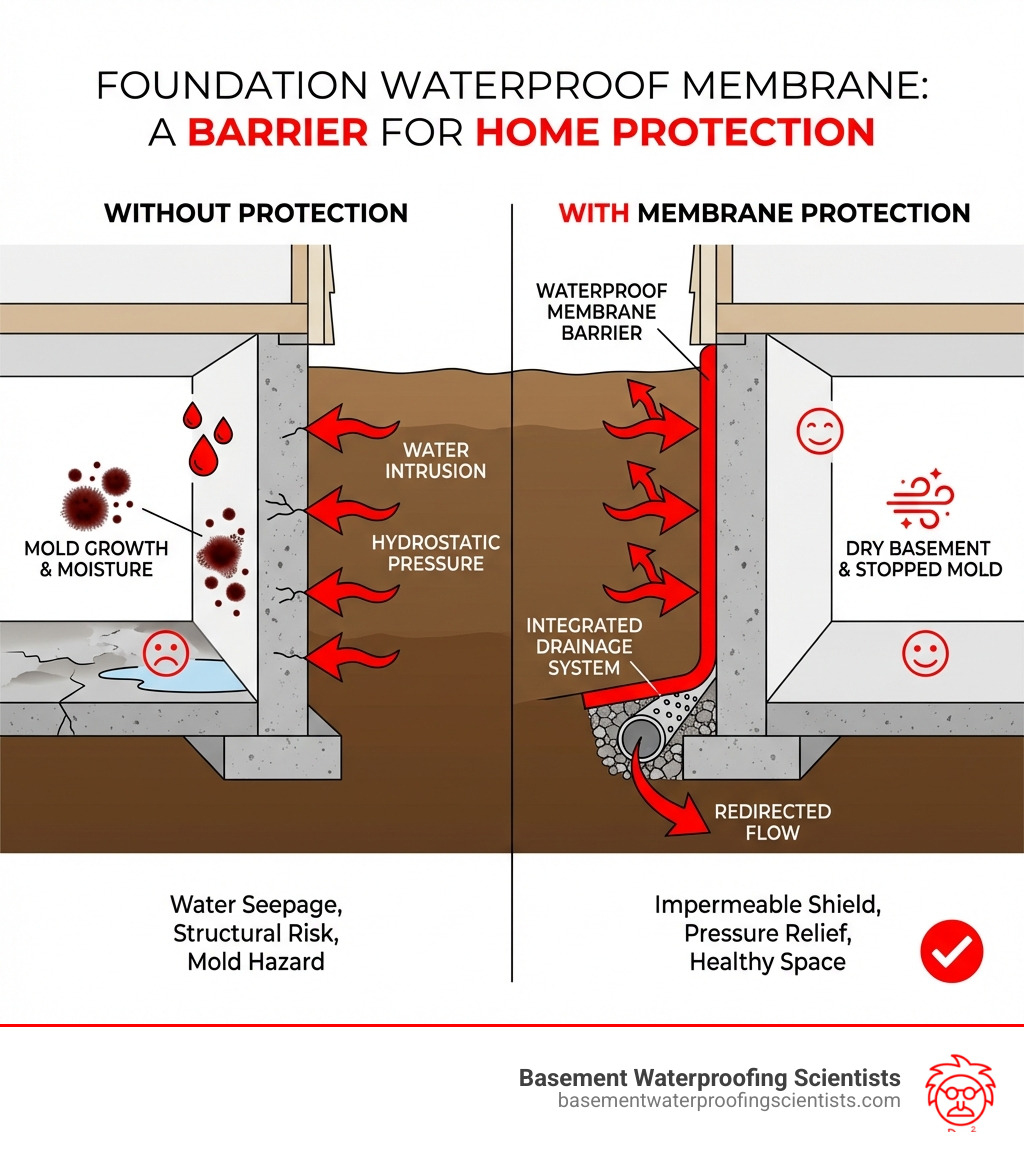
A properly installed foundation waterproof membrane can extend your foundation’s lifespan by up to 50%. It creates a physical barrier that stops water before it penetrates concrete walls, working in tandem with drainage systems to manage hydrostatic pressure and redirect groundwater away from your home.
Whether you’re building new, renovating, or finally addressing persistent leaks, understanding the types of membranes available and how they work is essential to making an informed decision that protects your investment for decades to come.
I’m Darin Garvey, and over my 30+ years specializing in basement waterproofing in the Philadelphia area, I’ve seen how the right foundation waterproof membrane transforms damp, unusable basements into dry, healthy spaces. My team at Basement Waterproofing Scientists uses advanced leak detection and proven membrane systems to deliver lasting solutions custom to each home’s unique challenges.
Foundation waterproof membrane terms simplified:
- exterior concrete foundation waterproofing
- how to waterproof exterior foundation wall
- how long does waterproofing coating on concrete foundation exterior last
The Unseen Shield: Why a Waterproof Membrane is Essential
Imagine your home as a fortress. The foundation is its bedrock, and a foundation waterproof membrane is the impenetrable shield guarding against the relentless assault of groundwater. Without this shield, your fortress is vulnerable.
It’s crucial to distinguish between waterproofing and dampproofing. Dampproofing is a basic coating that resists soil moisture but fails under water pressure—think of it as a light rain jacket. Waterproofing is a robust membrane system designed to block water even under intense hydrostatic pressure, making it your heavy-duty storm gear. While building codes like IRC® R406 may only require dampproofing, true waterproofing offers far superior protection.
Hydrostatic pressure is the force of groundwater pressing against your foundation. After heavy rain or due to a high water table—common in Pennsylvania, New Jersey, and Delaware—this pressure becomes immense. It can force water through porous concrete and tiny cracks, leading to significant structural damage and costly repairs.
This constant battle against water weakens concrete, can lead to efflorescence (those white mineral deposits on your basement walls), and creates a breeding ground for mold and mildew. Mold isn’t just unsightly; it can significantly impact indoor air quality and pose health risks. By protecting your foundation from water intrusion, a foundation waterproof membrane is essential to prevent cracks, high humidity, and mold growth.
Beyond preventing immediate damage, a high-quality foundation waterproof membrane protects your home’s structural longevity. Foundations are the central element of any construction, ensuring stability and load distribution. Preserving their integrity directly translates to a longer, healthier life for your entire home. Plus, a dry, healthy basement significantly increases your property value. After all, who wants to buy a house with a damp, musty basement?
For more in-depth information on keeping your basement dry, check out our guide: More info about Waterproofing Your Basement: A Homeowner’s Guide.
What is a foundation waterproofing membrane and how does it work?
At its core, a foundation waterproof membrane is an impermeable barrier applied to the exterior of a foundation wall to prevent water from penetrating the structure. Think of it as a super-tough, continuous skin for your foundation.
Here’s how this unseen shield works:
- Physical Barrier: The membrane blocks liquid water and soil gases (like radon) from entering the basement.
- Source Control: It stops water before it can seep through porous concrete, sealing off potential entry points.
- Seamless Adhesion: It adheres securely to the foundation, creating a continuous seal that prevents water from traveling behind the membrane.
- Durability: Modern membranes are made from materials like high-density polyethylene (HDPE) that resist corrosive agents in the soil.
- Water Management: It works with a perimeter drain (French drain) to guide water away from the foundation, relieving hydrostatic pressure.
A foundation waterproof membrane works to keep your basement dry, healthy, and usable. It’s a critical component of a comprehensive exterior waterproofing strategy. Learn more about our approach to More info about Exterior Foundation Waterproofing.
Key Benefits for Your Home’s Health and Stability
Investing in a foundation waterproof membrane isn’t just about fixing a problem; it’s about making a smart investment in your home’s future. The benefits extend far beyond simply keeping water out:
- Dry, Usable Basement Space: Transform a damp, musty basement into a comfortable living area, home office, or storage space, adding valuable square footage to your home.
- Preventing Costly Water Damage Repairs: Avoid average water damage repair costs of $5,000 to $10,000 by preventing leaks before they start. The growing global market for foundation waterproofing highlights the recognized value of this preventative measure.
- Safeguarding Foundation Integrity: A membrane protects your foundation from erosion, freeze-thaw cycles, and hydrostatic pressure, ensuring the long-term stability and strength of your home. Read more about More info about Foundation Sealing to Improve Structural Stability.
- Improving Indoor Air Quality: A dry basement prevents mold and mildew growth, which release spores that can trigger allergies and asthma, leading to a healthier indoor environment.
- Extending Building Lifespan by up to 50%: By protecting your home’s most critical component from water damage, a waterproof membrane can significantly increase the lifespan of your entire building.
A Guide to Foundation Waterproofing Membrane Types
Just as no two homes are exactly alike, neither are all waterproofing challenges. That’s why there’s a variety of foundation waterproof membrane types, each with unique properties suited for different conditions and applications. Understanding these differences is key to choosing the right solution for your home in Pennsylvania, New Jersey, or Delaware.
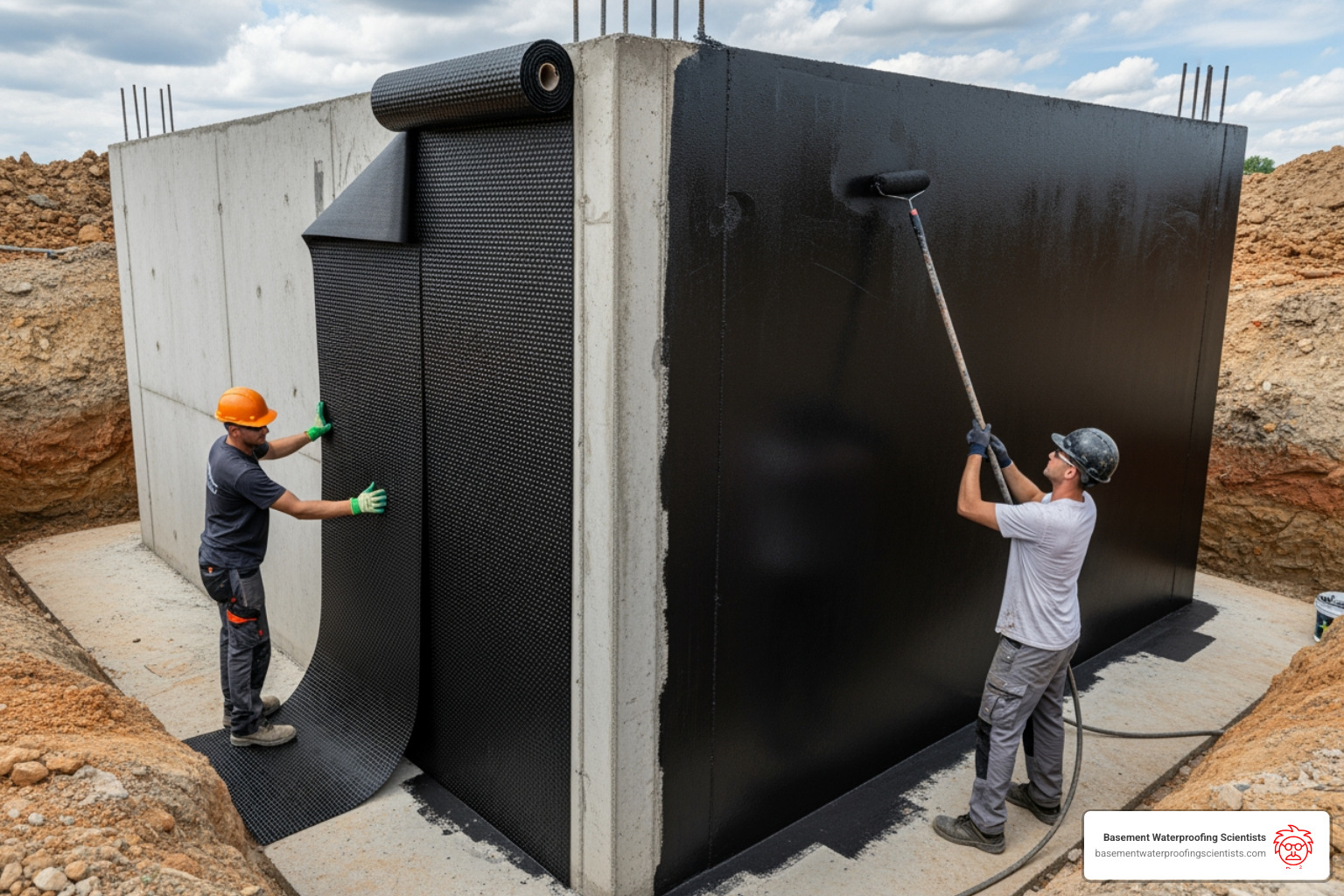
These membranes use advanced materials to create an impervious barrier. Key components include:
- Polymers: Synthetic materials offering flexibility, durability, and chemical resistance.
- Rubberized Asphalt: A flexible, self-healing blend of asphalt and rubber polymers.
- Modified Bitumen: Polymer-modified asphalt for improved durability, often used in sheet membranes.
- High-Density Polyethylene (HDPE): A rigid, robust plastic used for dimpled sheet membranes.
- Flexible Polyolefin (FPO): A highly flexible material with excellent bonding capabilities.
For a deeper dive into the materials that seal your foundation, check out our More info about Best Foundation Sealant Guide.
Sheet Membranes: Rolls of Protection
Sheet membranes are pre-manufactured rolls of waterproofing material that are applied to the foundation walls. They are a popular choice, especially for new construction, due to their consistent thickness and controlled application.
Common types include:
- Self-Adhering Membranes: These cold-applied membranes have an adhesive backing. After peeling a release liner, the sheet is pressed onto the primed foundation wall, making installation quick and safe.
- Mechanically-Fastened Membranes: These sheets are physically attached to the foundation with fasteners, and the seams are sealed with tape or heat welding.
- Dimple Boards (Air-Gap Membranes): Made of HDPE, these dimpled sheets create an air gap against the foundation. This gap helps drain moisture, reduces hydrostatic pressure, and provides puncture resistance.
| Feature | Self-Adhered Membranes | Liquid-Applied Membranes |
|---|---|---|
| Application | Rolls are unrolled and pressed onto primed surface | Sprayed, rolled, or troweled on |
| Cost | Moderate to High (material cost) | Moderate (material cost) |
| Seam Integrity | Overlaps require careful sealing with tapes/adhesives | Seamless, monolithic layer |
| Ideal Conditions | Large, flat surfaces; New construction; Moderate temps | Irregular surfaces, complex details; Existing structures |
| Puncture Resist. | Generally good, especially dimpled versions | Varies by thickness and material, can be reinforced |
| Flexibility | Good, especially rubberized asphalt or SBS-modified | Excellent, bridges minor cracks |
Liquid-Applied Membranes: A Seamless Barrier
Liquid-applied membranes are coatings sprayed, rolled, or troweled onto the foundation, creating a seamless, monolithic waterproof layer. They are ideal for irregular surfaces or foundations with many penetrations.
Types of liquid-applied membranes include:
- Spray-Applied Polymers: These are often polyurethane or asphalt-emulsion based, applied with specialized spray equipment to create a thick, continuous barrier.
- Roller-Applied Coatings: Similar to paint, these coatings are applied with rollers, typically requiring multiple coats to achieve the desired thickness and impermeability.
- Cementitious Waterproofing: These are cement-based coatings mixed with polymers, creating a durable, rigid, yet flexible waterproof layer.
The primary advantage of liquid-applied membranes is their ability to form a truly seamless barrier, eliminating the potential weak points that can occur at the seams of sheet membranes. They offer excellent flexibility and crack-bridging capabilities, meaning they can stretch and move with minor foundation shifts without compromising their waterproof integrity. For more on coatings, check out our More info about Best Exterior Foundation Coating.
The Blueprint for a Dry Foundation: Selection and Installation
Choosing the right foundation waterproof membrane is a bit like selecting the right superhero for the job—you need someone with the specific powers to tackle your unique villains (aka, water problems!).
Choosing the right membrane
When we help homeowners in areas like Philadelphia, Reading, or Middletown, NJ, select a foundation waterproof membrane, we consider several critical factors:
- Soil Conditions: Is your soil clay-heavy and prone to holding water (like much of the soil in our service areas), or is it sandy and well-draining? Clay soils will exert higher hydrostatic pressure.
- Water Table Level: Is your home situated in an area with a high water table? If so, you’ll need a robust system designed for constant water exposure, possibly a two-ply membrane for sites below the water table, whereas a single-ply system might suffice above it.
- Climate Impact: Our region experiences significant temperature fluctuations, from freezing winters to hot, humid summers. Membranes must be able to withstand these changes without cracking or losing adhesion. Some membranes are specifically designed for cold weather installation, able to be applied at temperatures as low as 14°F (-10°C) after conditioning.
- Project Budget: While a foundation waterproof membrane is a crucial investment, we work with our clients to find solutions that fit their budget without compromising effectiveness. The average cost for basement waterproofing is between $4K and $8K, and this investment protects against much costlier repairs down the line.
The right choice ensures long-term protection. For detailed guidance on waterproofing your exterior foundation wall, visit More info about How to Waterproof Exterior Foundation Wall.
Step-by-Step Installation Guide
Proper installation is paramount to the effectiveness of any foundation waterproof membrane. A fantastic product poorly installed is as good as no product at all! Our professional installation process is meticulous and thorough:
Tools and Materials Needed:
- Excavation equipment
- Cleaning brushes and scrapers
- Concrete repair products (non-shrink grout, elastomeric sealant)
- Membrane-specific primer
- Foundation waterproof membrane (rolls or liquid)
- Rollers, utility knives, and detail tape
- Perimeter drain (French drain) components
- Drainage/protection board
- Proper backfill material (sand, gravel)
Here’s a general overview of the installation process:
- Surface Preparation: The foundation wall is cleaned to be dry and free of all debris, ensuring a smooth surface for optimal membrane adhesion.
- Crack Repair: All cracks and holes are repaired. Minor cracks are sealed, while larger ones require concrete repair products after addressing any underlying structural issues.
- Primer Application: A membrane-specific primer is applied to the wall to ensure a strong bond between the membrane and the concrete.
- Membrane Application Techniques:
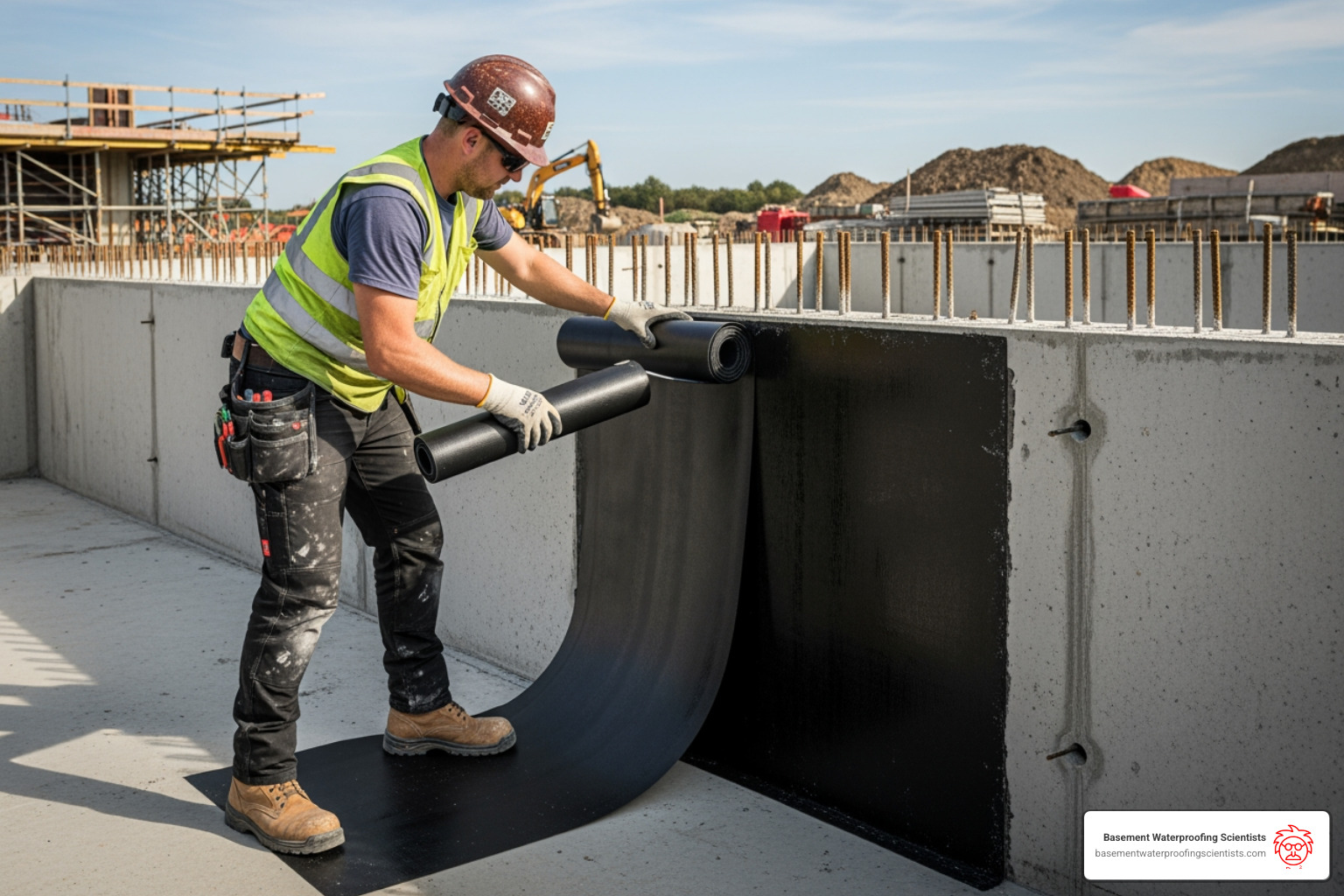
- Sheet Membranes: Rolls are carefully unrolled, typically starting from the bottom of the wall, and pressed firmly onto the primed surface. We use rollers to ensure full contact and eliminate air pockets or wrinkles.
- Liquid-Applied Membranes: Applied evenly by spraying, rolling, or troweling, building up the necessary thickness in layers.
- Overlapping Seams: For sheet membranes, we ensure a minimum overlap of 3 to 6 inches, following manufacturer guidelines to create a continuous, watertight barrier.
- Detailing Corners and Penetrations: We use specialized tapes and sealants to carefully seal common weak points like corners and pipe penetrations.
- Integrating with a French Drain: The membrane is integrated with a perimeter French drain at the foundation’s base. This system collects and channels water away from the home, relieving pressure.
- Protection Board Installation: A drainage or protection board is installed over the membrane to shield it from damage during backfilling.
- Backfilling: The area is carefully backfilled, using sand or protection panels if the soil is rocky or clay-like to protect the new waterproofing system.
For a comprehensive visual guide, refer to this Foundation Waterproofing Membrane Installation Guide.
Common Challenges and Mistakes to Avoid
Even with the best materials, mistakes during installation can compromise the entire waterproofing system. We’ve seen it all, and these are the pitfalls we diligently avoid:
- Inadequate Surface Cleaning: Applying a membrane to a dirty, dusty, or uneven surface is like trying to stick a band-aid to a muddy knee—it simply won’t adhere properly. Proper preparation is non-negotiable.
- Improper Seam Overlap: Skimping on overlap or failing to properly seal seams on sheet membranes creates direct pathways for water. Each seam is a potential leak point if not carefully executed.
- Applying in Wrong Weather Conditions: Temperature and moisture are critical. Installing membranes in freezing temperatures (unless using specialized cold-weather products) or during rain/snowfall can lead to poor adhesion and premature failure. Conversely, applying some membranes in extremely hot conditions can cause them to overstretch or cure too quickly.
- Puncturing the Membrane During Backfill: This is a surprisingly common issue. Without a protective drainage board, rocks or heavy equipment can easily tear the membrane, creating an immediate leak.
- Ignoring Manufacturer Instructions: Every foundation waterproof membrane has specific guidelines for primer, application temperature, overlap, and curing. Deviating from these instructions voids warranties and invites failure.
- Choosing the Wrong Product for the Climate: A membrane suitable for a dry desert climate won’t necessarily stand up to the high water tables and freeze-thaw cycles we experience in the Northeast. Matching the product to the environmental conditions is paramount.
Long-Term Performance and Practical Considerations
The global waterproofing market is booming, expected to grow from USD 20.5 billion in 2023 to USD 33.7 billion by 2028. This reflects a growing recognition that robust waterproofing is essential for durable, healthy buildings.
As we noted earlier, water damage is incredibly costly, with average repairs ranging from $5,000 to $10,000. Preventing these costs is a significant driver for investing in a quality foundation waterproof membrane.
It’s also vital to adhere to building codes. For example, the International Residential Code (IRC) R406 provides guidelines for foundation waterproofing. We ensure all our solutions meet or exceed local codes in Pennsylvania, New Jersey, and Delaware.
Finally, we consider environmental considerations. While most modern membranes are safe once installed, some older liquid-applied products might have higher VOC (Volatile Organic Compound) content during application. We prioritize products that are effective, durable, and as environmentally friendly as possible.
For an extensive resource on concrete foundations, explore our More info about Concrete Foundation Waterproofing: Ultimate Guide.
Maintenance, Longevity, and Associated Costs
A well-installed foundation waterproof membrane is designed for the long haul. While the use of waterproofing membranes can extend the lifespan of a foundation by up to 50%, the actual longevity depends on several factors:
- Type and Quality of Membrane: High-performance materials like FPO, HDPE, or SBS-modified bitumen generally offer superior durability compared to basic asphaltic coatings.
- Installation Quality: As discussed, proper preparation and application are paramount. A professional installation by experienced contractors significantly extends the membrane’s life.
- Soil Conditions and Hydrostatic Pressure: Foundations in areas with consistently high hydrostatic pressure or aggressive soil agents may experience more stress, potentially affecting the membrane over many decades.
- Protection During Backfill: The use of a drainage board or protection panel is crucial to prevent mechanical damage to the membrane, which could lead to premature failure.
Maintenance requirements for exterior foundation membranes are minimal once installed and backfilled. The most important “maintenance” is ensuring your entire water management system is functioning correctly:
- Regular Inspections: Periodically check your gutters, downspouts, and landscaping to ensure water is directed away from your foundation.
- Sump Pump Checks: If you have a sump pump, ensure it’s working properly, especially before and after heavy rains.
- Drainage System Performance: Keep an eye on any signs of standing water around your foundation, which could indicate an issue with your perimeter drain.
Regarding costs, professional installation of a foundation waterproof membrane system typically ranges from $4,000 to $8,000. While a significant investment, it provides a clear return on investment when compared to the average water damage repair cost of $5,000 to $10,000, not to mention preventing structural damage and mold. It’s a proactive measure that saves money and stress.
For more details on what to expect for exterior waterproofing projects, see our pages on Cost for Waterproofing Foundation From Outside and More info about How Long Does Waterproofing Coating on Concrete Foundation Exterior Last?.
Frequently Asked Questions about Foundation Waterproofing Membranes
How does a foundation waterproof membrane protect against hydrostatic pressure?
A foundation waterproof membrane protects against hydrostatic pressure by creating an impermeable barrier that stops water from penetrating the foundation. It works as part of a system, typically with a perimeter drainage system (like a French drain). The membrane directs water down to the drain, which channels it away from the foundation, relieving the pressure. This integrated approach prevents water from being forced through your basement walls or floor.
Can I install a waterproofing membrane myself?
While a DIY installation is tempting, we strongly recommend professional application. The longevity of a foundation waterproof membrane depends on precise installation, which is difficult to achieve without experience. Professionals have the expertise for:
- Flawless Surface Preparation: The most critical step for proper adhesion.
- Expert Crack Repair: Identifying and correctly sealing all vulnerabilities.
- Proper Sealing: Carefully sealing seams and detailing around corners and pipes to prevent leaks.
- Drainage System Integration: Ensuring the membrane works seamlessly with the French drain system.
- Specialized Equipment: Using the right tools for a uniform application.
- Warranty Protection: Professional installation is often required for manufacturer warranties and comes with a contractor’s guarantee.
Entrusting this critical job to professionals ensures a lasting, leak-free result.
What is the difference between positive-side and negative-side waterproofing?
This refers to where the waterproofing is applied:
-
Positive-Side Waterproofing: This is applied to the exterior of the foundation, facing the water source (the soil). An exterior foundation waterproof membrane is a positive-side solution. It stops water before it enters the concrete, making it the most effective method for keeping the structure dry and protected.
-
Negative-Side Waterproofing: This is applied to the interior of the basement wall. It attempts to hold back water that has already penetrated the foundation. While it can manage moisture, it doesn’t stop the foundation itself from becoming saturated.
For long-term protection, positive-side waterproofing is the preferred and superior approach.
Your Foundation’s Future is Dry and Secure
We’ve journeyed through foundation waterproof membranes, uncovering their vital role as your home’s unseen shield. From preventing the costly ravages of water damage and mold to safeguarding your foundation’s structural integrity and extending your home’s lifespan by up to 50%, the benefits are undeniable.
Choosing the right membrane—whether it’s a sheet membrane with its consistent thickness or a liquid-applied solution for a seamless barrier—and ensuring its professional installation are paramount. It’s an investment, not an expense, that pays dividends in peace of mind, improved indoor air quality, and increased property value.
For homeowners in Pennsylvania, New Jersey, and Delaware, dealing with basement moisture is a common concern. But it doesn’t have to be a permanent one. For a professional assessment and a guaranteed solution custom to your home, trust the experts at Basement Waterproofing Scientists. We use specialized equipment to identify leak sources to fix leaks for less, ensuring your foundation’s future is dry and secure.
Get a quote for your exterior foundation waterproofing project today!