

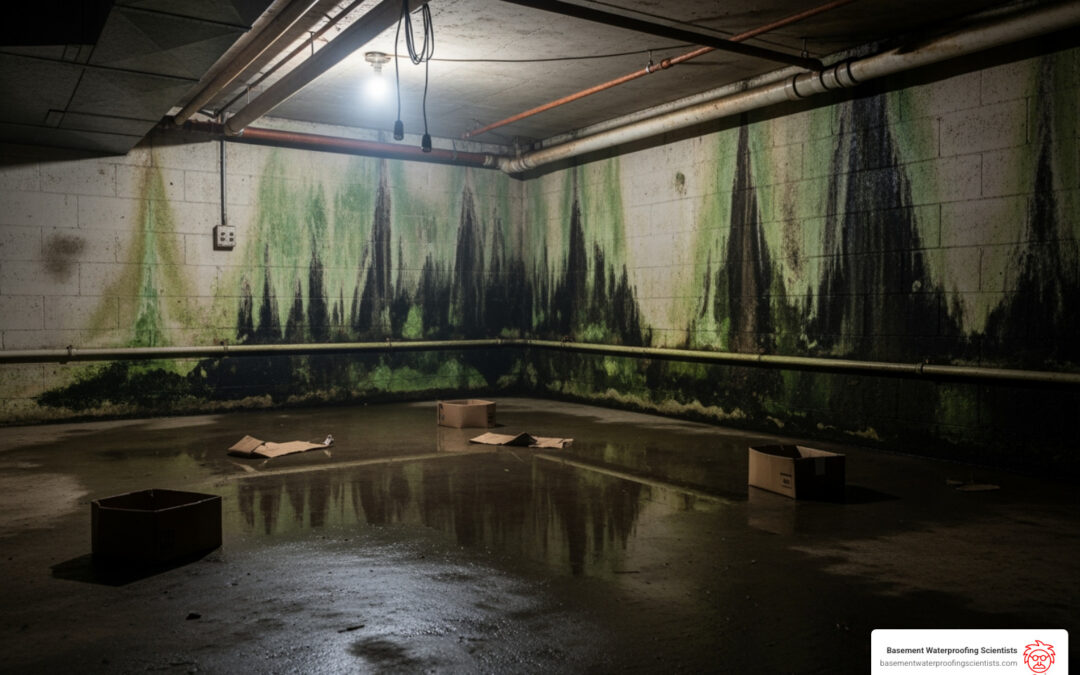
The best outside basement waterproofing approach is the one that fits the water source, foundation and access. It may combine runoff corrections, localized repairs, a membrane assembly and drainage. Full-perimeter excavation should follow a diagnosis rather than be prescribed for every damp basement.
Which outside conditions should be investigated?
Check roof-water discharge, grade, window wells, penetrations and above-grade wall details. Record where basement water first appears and how it relates to rain. Plumbing and condensation remain separate possibilities even when moisture is noticed near an exterior wall.
How can the outside work be matched to the source?
| Finding | Potential scope discussion |
|---|---|
| Runoff collecting at the house | Gutters, downspouts and surface drainage |
| Opening or penetration leak | Specific flashing, sealing or well-drainage repair |
| Accessible buried wall defect | Preparation, suitable repairs and membrane assembly |
| Groundwater needing collection | Foundation drainage and a suitable outlet |
| Moving or deteriorated wall | Separate structural or masonry evaluation |
What makes a membrane project complete?
Specify the substrate, preparation, compatible products, transitions and top termination. Explain protection during backfill and how water reaches a functioning outlet. MEL-ROL installation guidance illustrates details for one product; the same instructions do not govern every membrane.
Is dampproofing the same thing?
No. Match the documented product and assembly to the exposure. The SEALMASTIC emulsion manufacturer page describes that product as dampproofing. A black coating’s appearance alone does not identify its intended performance.
When should outside work be compared with inside collection?
Where exterior access is constrained or water enters beneath the floor, compare suitable alternatives using the same diagnosis. Interior collection and exterior barriers perform different functions. Neither automatically establishes structural repair or resolves indoor humidity.
What should you ask about excavation?
Confirm utility locating, safe work planning, protection of footing support and adjacent structures, and restoration. Do not treat deep foundation excavation as a routine DIY step. Ask for photographs of concealed details and actual written maintenance and warranty terms.
For more on the access decision, see our exterior waterproofing comparison guide. For southeastern PA, southern NJ or Delaware, request a free inspection at 610-615-7111.